Plan a complete production line
Match cleaning, crushing, roasting, pressing, filtering and filling equipment.
Open page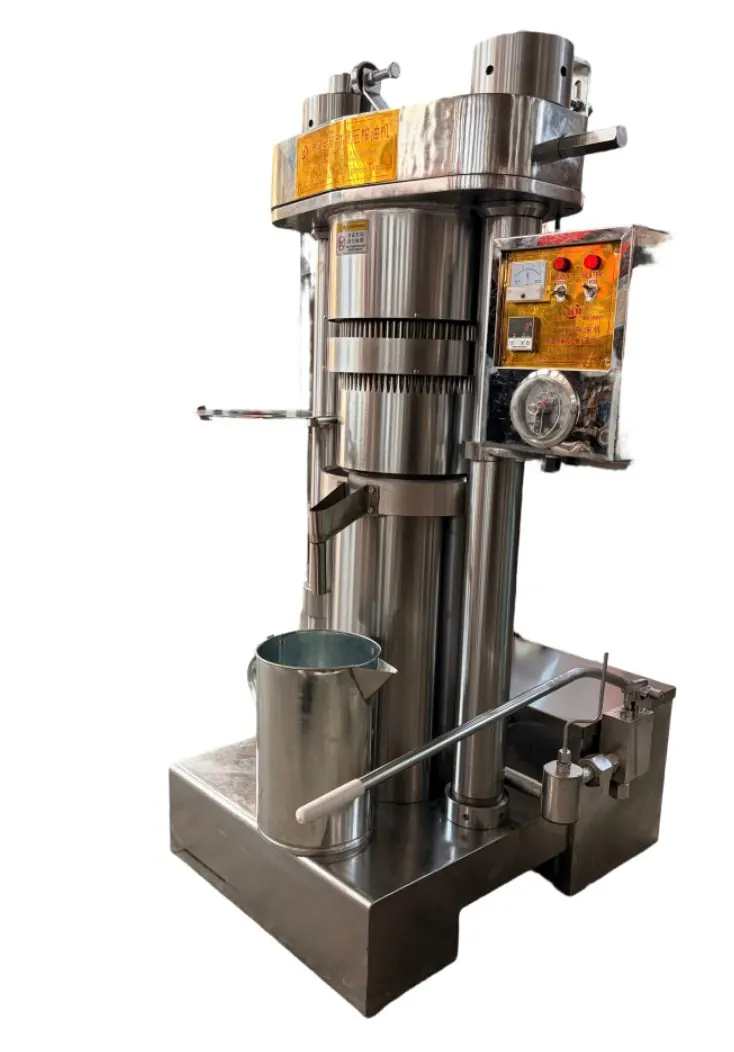
The small sesame oil press is a small-batch equipment category commonly considered for sesame-oil shops, organic-oil counters, and compact commercial rooms. Most models on this page use a Korean-type hydraulic layout; final oil quality and recovery depend on the raw material, pretreatment, operating window, and agreed test method.
Small Korean-type hydraulic presses use a batch loading and pressing layout that can be evaluated with sesame samples before purchase. Relevant selection points include:
That is why this type of machine is commonly recommended for sesame-focused retail businesses rather than general large-scale oilseed projects.
| Item | Small Sesame Press | Industrial Hydraulic Press |
|---|---|---|
| Capacity | 5-20 kg | 60-100 kg |
| Typical material focus | Sesame | Multi oil seeds |
| Usage | Shop / Retail | Factory |
| Production mode | Small batch | Bulk production |
| Investment | Low | Medium to high |
Although the machine can technically handle some other premium materials, it is not usually selected for heavy-duty bulk processing projects such as:
For broader oilseed coverage or a larger equipment class, compare 300 Series, 325 Series, and Sesame (Sesame Oil) Solutions.
| Model | Capacity class | Supplier reference daily capacity | Typical project |
|---|---|---|---|
| KHOP-10KG | 10 kg / batch class | 1.0 ton / 24 hours | Entry-level sesame oil shop |
| KHOP-15KG | 15 kg / batch class | 1.8 ton / 24 hours | Established oil shop |
| KHOP-20KG | 20 kg / batch class | 2.1 ton / 24 hours | Shop plus small workshop |
The 1.0, 1.8, and 2.1 t/24 h figures are supplier references from specific test conditions and are not guarantees. A quotation and FAT/SAT protocol should state the raw-material species and lot, pretreatment, particle-size distribution, feed moisture, batch mass, the complete loading-to-cleaning-and-restart cycle, continuous test duration, permitted stops, weighing and calibration method, sampling or laboratory method, acceptance tolerance, utilities, and operator tasks. Only the criteria written into the signed contract form the acceptance boundary.
Ask the manufacturer to provide a written quotation covering configuration, voltage and frequency, contact materials, accessories, guards and controls, packing, delivery, spares, warranty, and after-sales channels. FAT and SAT scopes must be agreed separately. Remote support and any on-site commissioning or training require written confirmation of region, travel, visas, lodging, fees, duration, work content, buyer utilities, and acceptance responsibilities; unlisted services are not included.
Recommended next step
Compare the right capacity, confirm the raw-material process and request a factory configuration before ordering.
Match cleaning, crushing, roasting, pressing, filtering and filling equipment.
Open pageReview preparation and pressing routes for seeds, nuts and specialty materials.
Open pageCompare price, capacity, process, operation and startup requirements.
Open pageSend the material, target output and destination for a matched factory quote.
Request quoteReview additional machine, process and buyer resources on hydraulic-oil-press.com.
Open website