Plan a complete production line
Match cleaning, crushing, roasting, pressing, filtering and filling equipment.
Open page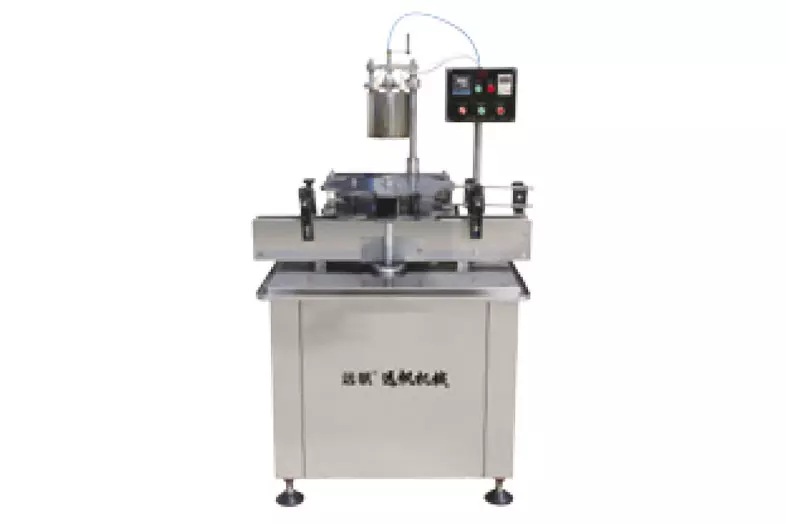
The single-head page is for a one-head shrinking station used as a stand-alone machine or on a medium-to-low-speed line. The series table is retained, but RS-1 with one head and 2000 p/h is the relevant selection reference. RS-6 with six heads and 6000 p/h is shown only to distinguish the multi-head option and is not a single-head output claim.
This machine shrinks PVC capsules on the bottle mouth after corking; it is not the cap-rolling model. The published envelope is bottle height 180-350, bottle diameter 60-100, capsule length 30-70, and capsule diameter 30-35. Final purchasing still requires representative bottles and capsules, and the page does not state whether capsule placement is manual or automatic.
For an inline project, first match the discharge rhythm from the Corking Machine Series, then check the handoff to the Labeling Machine Series. For stand-alone use, describe the intended infeed and outfeed in the inquiry. "Single-head" does not mean manual operation and does not establish that conveyors or capsule application are included.
No standard steam, electric-heating, or hot-air configuration is named here, and no temperature or heating construction is published. The supplier's technical quotation must identify the actual method and site interface without adding an assumed operating principle.
This is the existing series table. Use the RS-1 row as the starting point for a single-head quote, subject to the final written configuration.
| Model | Number of heads | Output (p/h) | Applicable bottle height | diameter | Applicable rubber cap length | diameter |
|---|---|---|---|---|---|---|
| RS-1 | 1 | 2000 | 180-350 | 60-100 | 30-70 | 30-35 |
| RS-6 | 6 | 6000 | 180-350 | 60-100 | 30-70 | 30-35 |
A purchase inquiry should state target rate, operating mode, bottle and capsule dimensions, capsule material, upstream corking and capsule-placement method, and downstream labeling interface. Supply representative samples or drawings. A lower-speed application still needs sample confirmation.
Ask the manufacturer to separate the base-machine price, supplied heat source, conveyor scope, format parts for each bottle/capsule, controls, spares, packing, and optional services. The public dimensional envelope is a selection range, not proof that guides, locating parts, or other adjustments are unnecessary; the delivered parts list controls.
At FAT, run each contracted format with the approved samples and document changeover, single-head infeed/outfeed, capsule appearance, and the agreed rate. Explicitly exclude capsule feeders, conveyors, or signals that are outside the quotation.
At SAT, verify the actual site power or other contracted heating utility, upstream/downstream height and pace, agreed continuous-run condition, and after-sales handover documents. Public output figures do not replace a signed test duration and acceptance standard.
Recommended next step
Compare the right capacity, confirm the raw-material process and request a factory configuration before ordering.
Match cleaning, crushing, roasting, pressing, filtering and filling equipment.
Open pageReview preparation and pressing routes for seeds, nuts and specialty materials.
Open pageCompare price, capacity, process, operation and startup requirements.
Open pageSend the material, target output and destination for a matched factory quote.
Request quoteReview additional machine, process and buyer resources on hydraulic-oil-press.com.
Open website