Plan a complete production line
Match cleaning, crushing, roasting, pressing, filtering and filling equipment.
Open page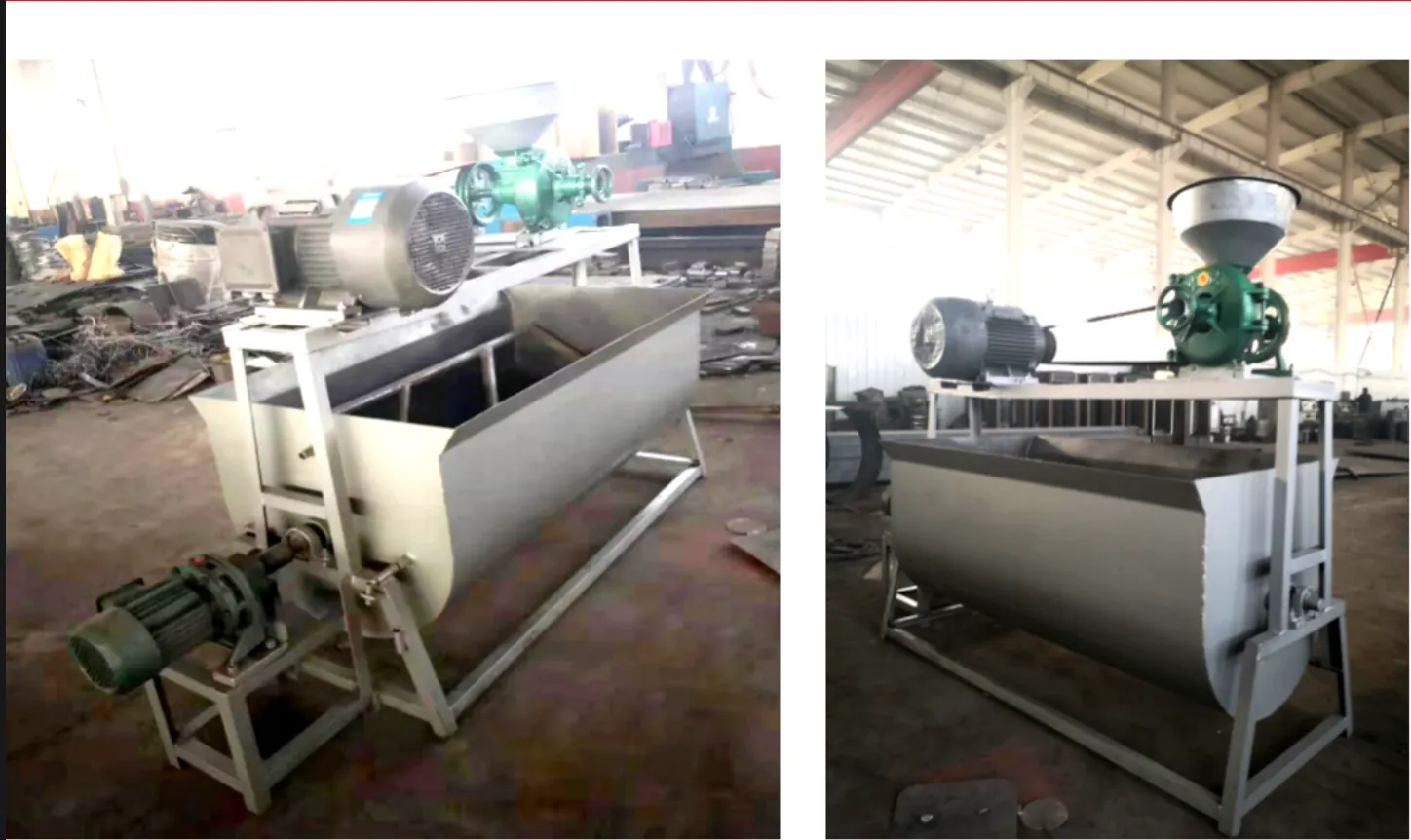
This integrated unit combines size reduction and mixing before hydraulic pressing. Its primary evaluation scope is cleaned hemp seed and flaxseed. Perilla, tea-seed kernels, almond, walnut, pine nut, pumpkin seed, coconut, or another oil-bearing material should be accepted only after a sample trial confirms feed behavior, particle distribution, temperature rise, discharge, and cleanability. Wet, sticky, abrasive, chemically contaminated, or corrosive feed is not assumed to be suitable.
For the 355–500 hydraulic cold-press range, the normal route is cleaning, low-temperature drying only when moisture requires it, metal removal, grinding and mixing, then direct pressing. The technical agreement should set the required particle-size distribution, acceptable temperature change, batch identity, transfer method, and maximum waiting time before pressing. The machine does not replace incoming-material cleaning or moisture control.
If it is placed before a 300 or 325 hot-press line, the quotation must separately define the downstream roasting or steam-conditioning stage. Grinding alone is not thermal conditioning, and no claim of continuous operation, zero temperature change, or the same result for every material is made without a representative-material test.
| Parameter | Value | Parameter | Value |
|---|---|---|---|
| Capacity | 750 Kg/h | Power | 15 Kw |
| Weight | Approx. 400 Kg | Dimensions | 2000×800×1500 mm |
The capacity shown in the public table is a supplier reference under its source conditions, not an unconditional output guarantee. Contracted capacity must identify the material, incoming size, moisture, feed method, target particle range, test duration, sampling method, and acceptance tolerance.
Send the raw-material name, origin, kernel or shell content, moisture range, oil content if known, incoming dimensions, foreign-material risk, target particle range, mixing purpose, required batch flow, working hours, and sample quantity. Also state whether different seeds, food allergens, or non-food materials will share the machine.
For a useful manufacturer quote, provide site voltage and frequency, upstream cleaning and conveying, downstream press model, transfer height, dust-collection requirement, room temperature, available floor space, and the buyer's preferred control and documentation language.
The quotation should identify the actual grinding parts, any screen or adjustment method, mixer and discharge arrangement, hopper, drive, controls, guards, product-contact materials, dust connection, supporting frame, and included cables or conveyors. It should also list excluded utilities and buyer-supplied items. These details cannot be inferred from motor power or external dimensions alone.
The discharge interface must match the selected cold press for particle range, batch mass, feed height, transfer container or conveyor, metal-control point, and dust containment. A buffer hopper is included only when it appears in the written scope.
Before purchase, agree how the grinding and mixing zones are opened, inspected, vacuumed or wiped, and how retained material is measured. FAT should include a representative changeover when cross-contamination matters. Food, allergen, chemical, and waste-derived materials should not share the unit unless the buyer's risk assessment and a validated cleaning method permit it.
FAT should use the agreed sample and record stable feed, motor load, particle-size results, material temperature before and after processing, mixing sample method, discharge behavior, dust leakage, abnormal vibration, cleaning access, and safety interlocks. SAT should confirm the actual upstream supply, downstream cold-press feed, site power, controls, and contracted operating period.
Purchase price depends on contact materials, grinding and mixing execution, controls, dust handling, conveyors, spares, export packing, documentation, FAT, installation, and commissioning. The commercial offer should state the warranty period and start point, wear-part treatment, recommended spare list and prices, remote support, site-service region, travel costs, training, response process, and exclusions in writing.
Review the 355 hydraulic cold press, compare the wider oil-press product range, or send raw-material and line data through the contact page for a configuration-based quotation.
Recommended next step
Compare the right capacity, confirm the raw-material process and request a factory configuration before ordering.
Match cleaning, crushing, roasting, pressing, filtering and filling equipment.
Open pageReview preparation and pressing routes for seeds, nuts and specialty materials.
Open pageCompare price, capacity, process, operation and startup requirements.
Open pageSend the material, target output and destination for a matched factory quote.
Request quoteReview additional machine, process and buyer resources on hydraulic-oil-press.com.
Open website