Compare machine models
Check hot-press, cold-press and small-shop models by batch capacity.
Open page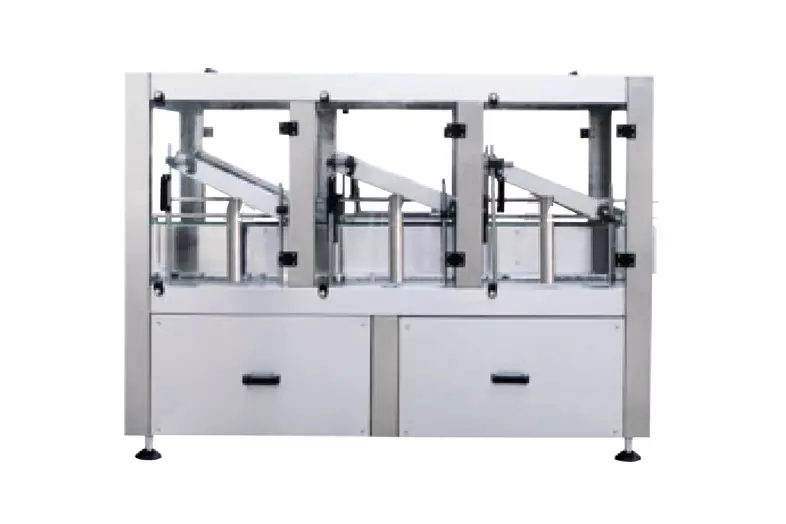
Bottle drying removes surface water before labeling, coding, inspection or case packing. It is different from product drying: the purchasing decision is driven by bottle geometry, the amount and location of retained water, line speed and the downstream surface condition required by the label or code.
Typical positions include:
The preferred position depends on whether water is inside the bottle, on the outside surface or trapped around the closure.
| Model | Selection focus |
|---|---|
| HG-2/HG-3 air-knife bottle dryer | Air-knife layout, bottle coverage and conveyor integration |
| HG-A/HG-B spider-arm bottle dryer | Directed air-contact arrangement and bottle-format fit |
Use the linked model pages for published specifications. Drying performance must be confirmed with the actual bottle, water load and downstream acceptance condition.
Send bottle drawings and samples, photos showing retained water, target output, upstream wet process, required downstream surface condition, conveyor dimensions, power supply, layout and destination. State whether the existing conveyor will be reused and who supplies drainage or acoustic treatment.
FAT should use approved bottles under an agreed wetting method. Define where residual droplets are checked, how long the line runs, acceptable bottle instability and the changeover procedure. Installation labor, local ducting or drainage, travel, training, spare blower parts and support response are included only when written into the commercial offer or contract.
Provide the bottle and wet-process conditions to receive a dryer configuration and itemized factory quote.
Recommended next step
Connect pretreatment, pressing, filtration and packaging into one practical production route.
Check hot-press, cold-press and small-shop models by batch capacity.
Open pageMatch cleaning, crushing, roasting, pressing, filtering and filling equipment.
Open pageCompare price, capacity, process, operation and startup requirements.
Open pageSend the material, target output and destination for a matched factory quote.
Request quoteReview additional machine, process and buyer resources on hydraulic-oil-press.com.
Open website