Compare machine models
Check hot-press, cold-press and small-shop models by batch capacity.
Open pageGrape seeds often arrive inside wet winery or juice pomace with skins, stems, pulp, and fermentation residue. The project must define whether the quoted input is wet pomace or separated dry seed; these are not interchangeable capacity bases.
Record pomace origin, time since pressing, skin and stem fraction, seed recovery basis, moisture, storage condition, and signs of mold or oxidation. Seed that has already been washed and dried must be quoted separately from wet pomace requiring recovery equipment.
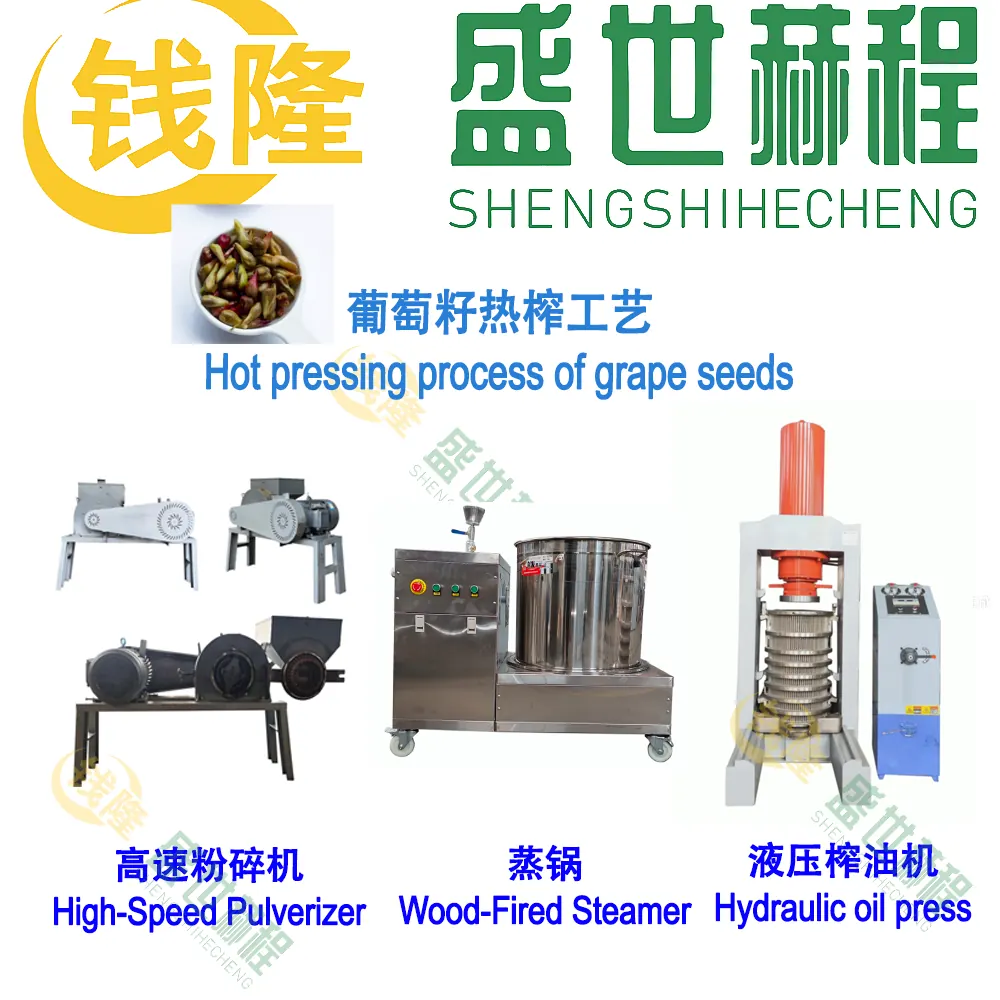
Start with a low-temperature hydraulic batch trial when the target is a specialty food or cosmetic oil. A gently conditioned comparison may be run on the same seed lot, but color, aroma, oxidation indicators, filtration behavior, and cake result must be recorded. The economics must include wet-pomace separation, drying, and seasonal operation rather than press capacity alone.
Specify settling and fine filtration, visible sediment, clarity, color, aroma, oxidation test method, and the package used to limit light and air. The sampling basis must state whether the evaluation is on crude oil, settled oil, or filtered oil.
Record wet-pomace and recovered dry-seed weights separately, impurity removal, moisture after drying, crush size, batch charge, cycle time, oil temperature, crude and filtered oil, and cake. After the agreed settling or filtration interval, document clarity, color, aroma, oxidation test results, and the exact sample and operating conditions used.
Send the actual wet pomace or dried seed, seasonal and daily capacity basis, drying conditions, oil specification, utilities, and destination for a complete grape-seed line quotation.
Recommended next step
Connect pretreatment, pressing, filtration and packaging into one practical production route.
Check hot-press, cold-press and small-shop models by batch capacity.
Open pageMatch cleaning, crushing, roasting, pressing, filtering and filling equipment.
Open pageCompare price, capacity, process, operation and startup requirements.
Open pageSend the material, target output and destination for a matched factory quote.
Request quoteReview additional machine, process and buyer resources on hydraulic-oil-press.com.
Open website