Compare machine models
Check hot-press, cold-press and small-shop models by batch capacity.
Open pageTea seed or camellia seed must be identified by species, crop year, whole-seed or kernel basis, and storage condition. Hull ratio and old or moldy kernels affect pressing behavior, oil flavor, filtration, and the usable input for equipment sizing.
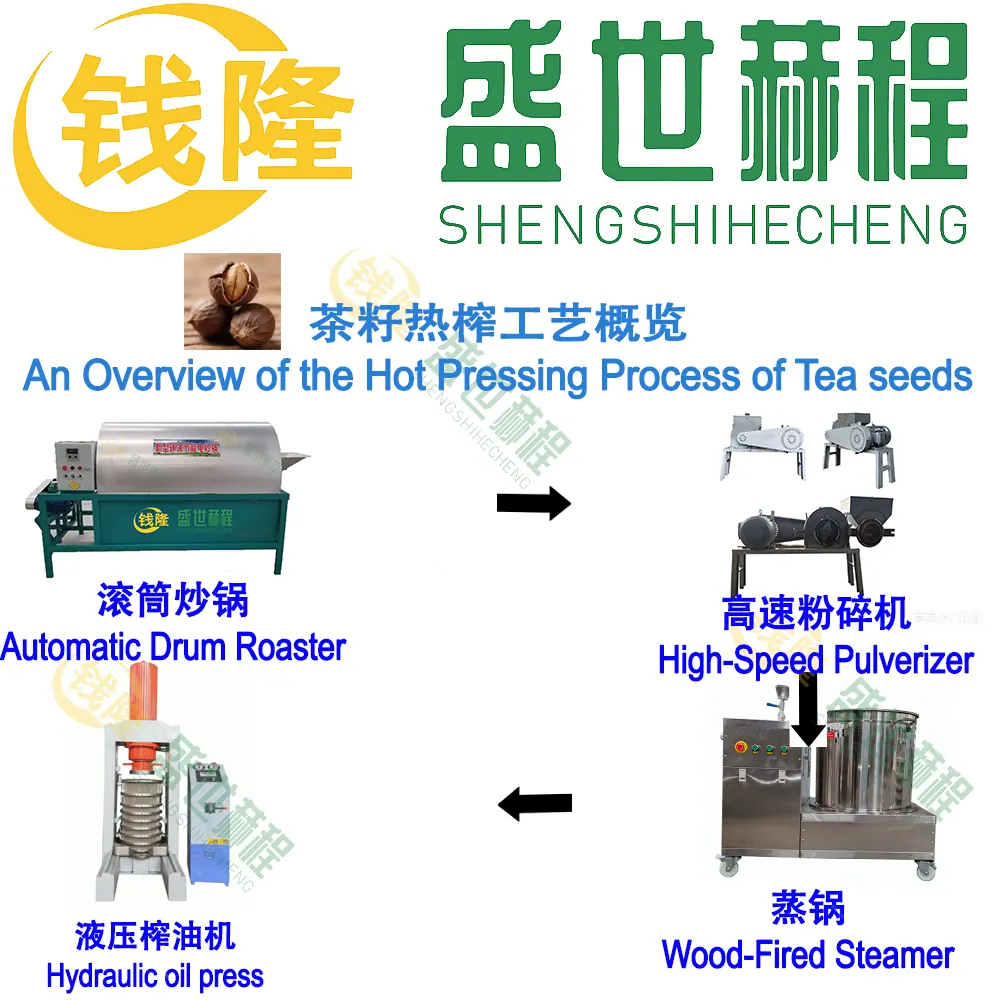
Declare whole seed or separated kernels, species or commercial name, origin, moisture, hull fraction, impurities, crop and storage history, and intended use. Remove moldy, insect-damaged, dark, or rancid seed. Quote capacity on cleaned whole seed or clean kernels.
Begin with a hydraulic batch trial on clean crushed kernels or a clearly defined whole-seed feed. Compare low-temperature and gently conditioned routes using the same lot, with color, aroma, filtration, cake, and cycle records. For higher continuous duty, compare a screw-press route. The post-press scope may include dewaxing or light refining where the finished-oil clarity target requires it.
Define settled, filtered, dewaxed, or lightly refined oil; visible sediment, color, aroma, wax behavior, and clarity under the agreed cooling or storage test. State sampling points, tank materials, and package requirements.
Record seed identity, shell separation and kernel loss, kernel moisture, crush size, conditioning settings, charge weight, cycle time, oil temperature, crude and filtered oil, and cake. After filtration or dewaxing, document color, aroma, sediment, and clarity using the agreed cooling test, plus cake discharge and cleaning.
Send the tea seed or camellia feed state, hull and moisture data, clean input, oil profile, filtration or dewaxing target, utilities, and destination for a trial-based quotation.
Recommended next step
Connect pretreatment, pressing, filtration and packaging into one practical production route.
Check hot-press, cold-press and small-shop models by batch capacity.
Open pageMatch cleaning, crushing, roasting, pressing, filtering and filling equipment.
Open pageCompare price, capacity, process, operation and startup requirements.
Open pageSend the material, target output and destination for a matched factory quote.
Request quoteReview additional machine, process and buyer resources on hydraulic-oil-press.com.
Open website