Compare machine models
Check hot-press, cold-press and small-shop models by batch capacity.
Open pageRapeseed and canola varieties are not interchangeable product specifications. Seed composition, erucic-acid data, desired flavor, throughput, and meal use must be known before choosing a cold batch press, warm screw press, pre-press, or refining scope.
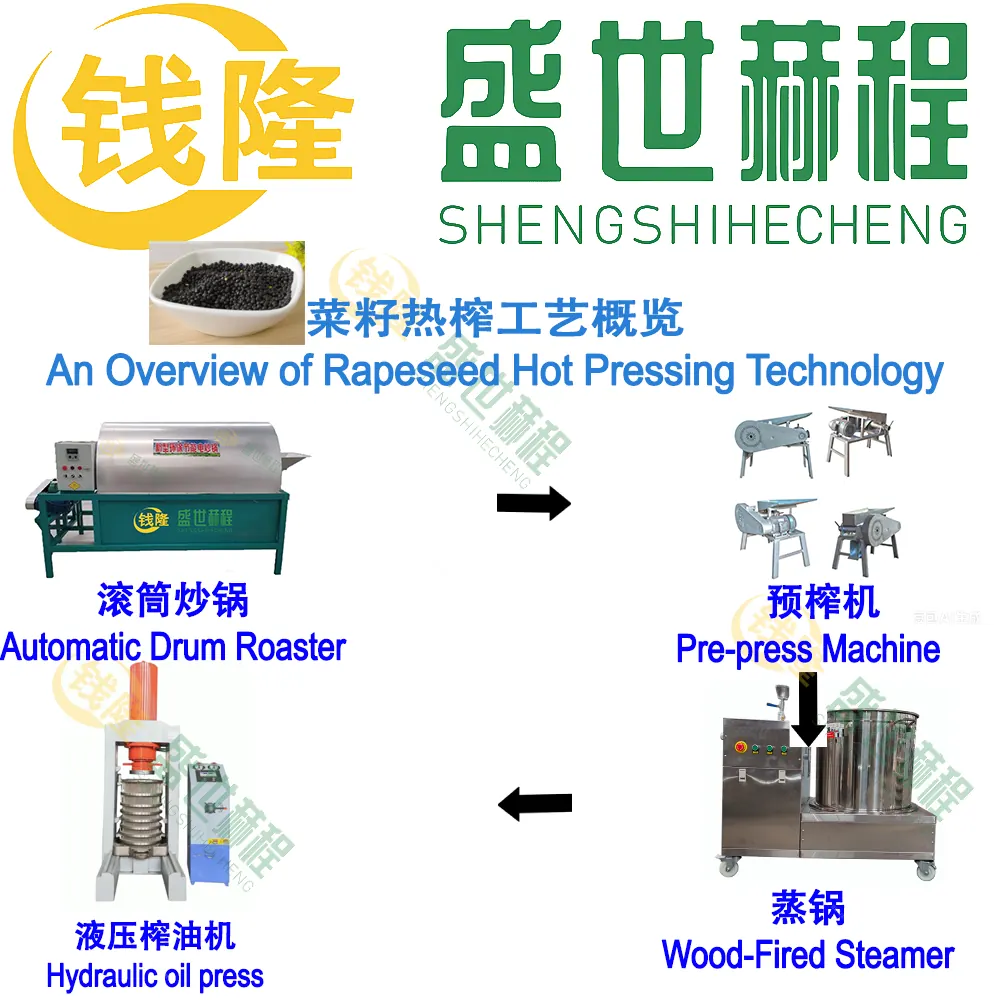
Declare variety and origin, rapeseed or canola classification, moisture, impurities, storage condition, available oil analysis, and erucic-acid data where relevant to the finished product. Quote capacity on cleaned seed.
Use low-temperature batch pressing only for a defined specialty product and verified seed. For commercial crude oil, compare warm conditioning with continuous screw pressing or pre-pressing according to capacity and meal target. Hydraulic batch data must not be extrapolated to continuous throughput without recorded cycles. Crude oil may require filtration, degumming, and refining.
Specify crude filtered or refined oil, solids, moisture, color, odor, degumming and refining scope, and the laboratory tests required for the selected seed and market. Define meal or cake sampling separately from oil acceptance.
Record cleaning loss, roll or crack condition, moisture and temperature after conditioning, feed rate or charge, cycle time, oil temperature, crude and filtered oil, and cake. Identify oil and meal sampling points and attach the agreed composition tests; press operation cannot establish variety-specific chemical compliance.
Send the rapeseed or canola sample data, clean-feed throughput, product and meal targets, pressing and refining scope, utilities, layout, and destination for a process quotation.
Recommended next step
Connect pretreatment, pressing, filtration and packaging into one practical production route.
Check hot-press, cold-press and small-shop models by batch capacity.
Open pageMatch cleaning, crushing, roasting, pressing, filtering and filling equipment.
Open pageCompare price, capacity, process, operation and startup requirements.
Open pageSend the material, target output and destination for a matched factory quote.
Request quoteReview additional machine, process and buyer resources on hydraulic-oil-press.com.
Open website