Compare machine models
Check hot-press, cold-press and small-shop models by batch capacity.
Open pageAn almond oil quotation must be based on the material that actually enters the press: shelled kernels, not whole nuts, shells, almond paste, or mixed confectionery waste. Kernel condition, intended use, and the required oil profile determine the pretreatment and pressing trial.
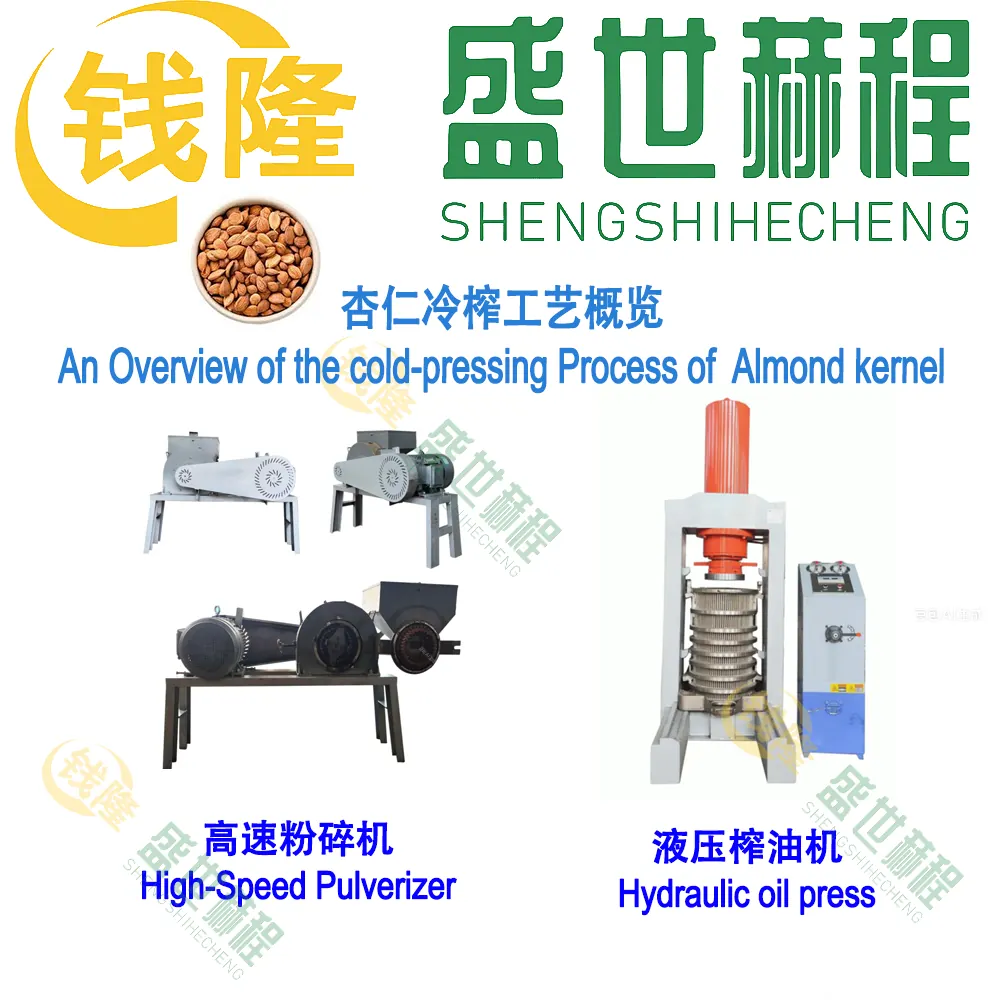
Use clean almond kernels with the variety, origin, storage history, and intended food, cosmetic, or industrial use declared. Record the shell fraction if in-shell almonds are supplied, and remove moldy, insect-damaged, scorched, or rancid kernels before sizing the line.
For premium light-flavor oil, start with a hydraulic batch cold-press trial on crushed kernels. A gently conditioned or roasted route is a different product specification and must be compared on the same lot. For continuous high-throughput duty, compare a screw-press route instead of multiplying batch assumptions.
Define whether the product is settled oil, fine-filtered oil, or oil for further refining. The purchase specification should state the agreed sampling time, visible water and sediment limit, clarity, color, aroma, and storage or packaging conditions that limit light and oxygen exposure.
Run the agreed almond lot and record incoming and prepared weight, moisture, crush size, batch charge, cycle time, oil temperature, crude oil, filtered oil, and cake weight using the agreed weighing method. Attach oil appearance and odor observations after the specified settling or filtration period, plus cake discharge, retained material, cleaning, and food-contact surface checks.
Send the almond sample condition, kernel input, target oil profile, filtration requirement, utilities, and destination so the quotation can define the tested route and exact equipment scope.
Recommended next step
Connect pretreatment, pressing, filtration and packaging into one practical production route.
Check hot-press, cold-press and small-shop models by batch capacity.
Open pageMatch cleaning, crushing, roasting, pressing, filtering and filling equipment.
Open pageCompare price, capacity, process, operation and startup requirements.
Open pageSend the material, target output and destination for a matched factory quote.
Request quoteReview additional machine, process and buyer resources on hydraulic-oil-press.com.
Open website