Compare machine models
Check hot-press, cold-press and small-shop models by batch capacity.
Open pageCastor seed and castor cake require a dedicated industrial handling plan. This is not an edible-oil line, and the press, filter, tools, storage, and cleaning equipment must be segregated from food production.
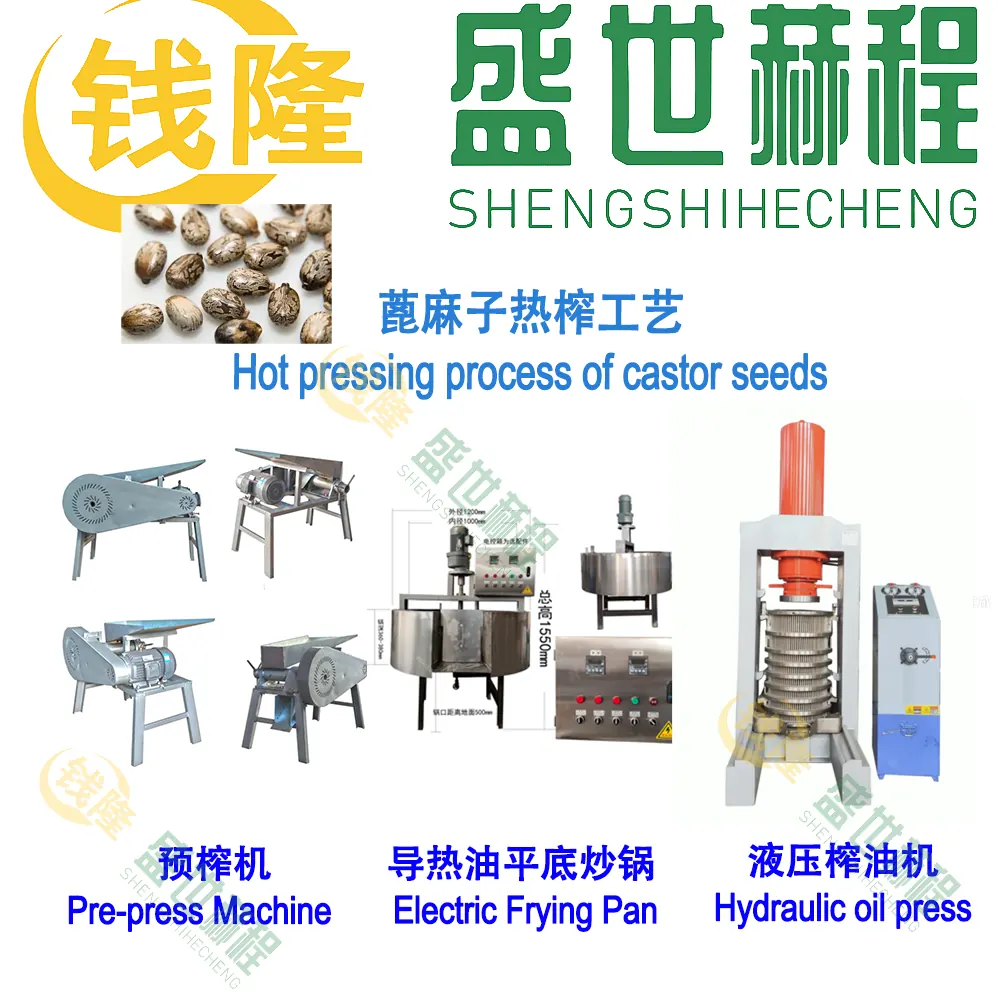
State whether the feed is whole seed, partially dehulled seed, or prepared material. Record moisture, impurities, source, storage condition, and available safety data. Castor seed and press cake present toxicity risks; pressing does not detoxify the oilseed residue or make it suitable for feed.
Use a dedicated industrial pressing route with guarded feeding, controlled conditioning, enclosed oil collection, and a defined cake-discharge procedure. Compare batch hydraulic or continuous mechanical pressing only after the representative seed trial, capacity requirement, worker-protection plan, and downstream processing scope are known.
Define crude or filtered industrial castor oil, solids level, visible water, sampling point, tank and seal materials, and downstream refining or chemical-processing scope. Cake containment, labeled storage, waste handling, ventilation, and decontamination boundaries must be part of the purchase specification.
Before load testing, verify segregation, guarding, dust control, personal-protection procedures, dedicated tools, and cake storage. During the trial, record moisture, dehulling or crush condition, conditioning settings, charge or feed rate, cycle time, oil temperature, crude and filtered oil, and cake. Record leak checks, filter result, residue handling, cleaning, and labeled sample transfer without treating the press as a detoxification step.
Send the castor seed sample, safety data, industrial oil specification, throughput, cake-handling plan, utility conditions, segregated layout, and destination for a scoped equipment quotation.
Recommended next step
Connect pretreatment, pressing, filtration and packaging into one practical production route.
Check hot-press, cold-press and small-shop models by batch capacity.
Open pageMatch cleaning, crushing, roasting, pressing, filtering and filling equipment.
Open pageCompare price, capacity, process, operation and startup requirements.
Open pageSend the material, target output and destination for a matched factory quote.
Request quoteReview additional machine, process and buyer resources on hydraulic-oil-press.com.
Open website