Compare machine models
Check hot-press, cold-press and small-shop models by batch capacity.
Open pageSesame oil equipment must be configured around the intended product: light cold-pressed oil, roasted aromatic oil, or another locally defined style. White or black sesame, hulled or unhulled seed, and washed or dry-cleaned preparation require separate trial records.
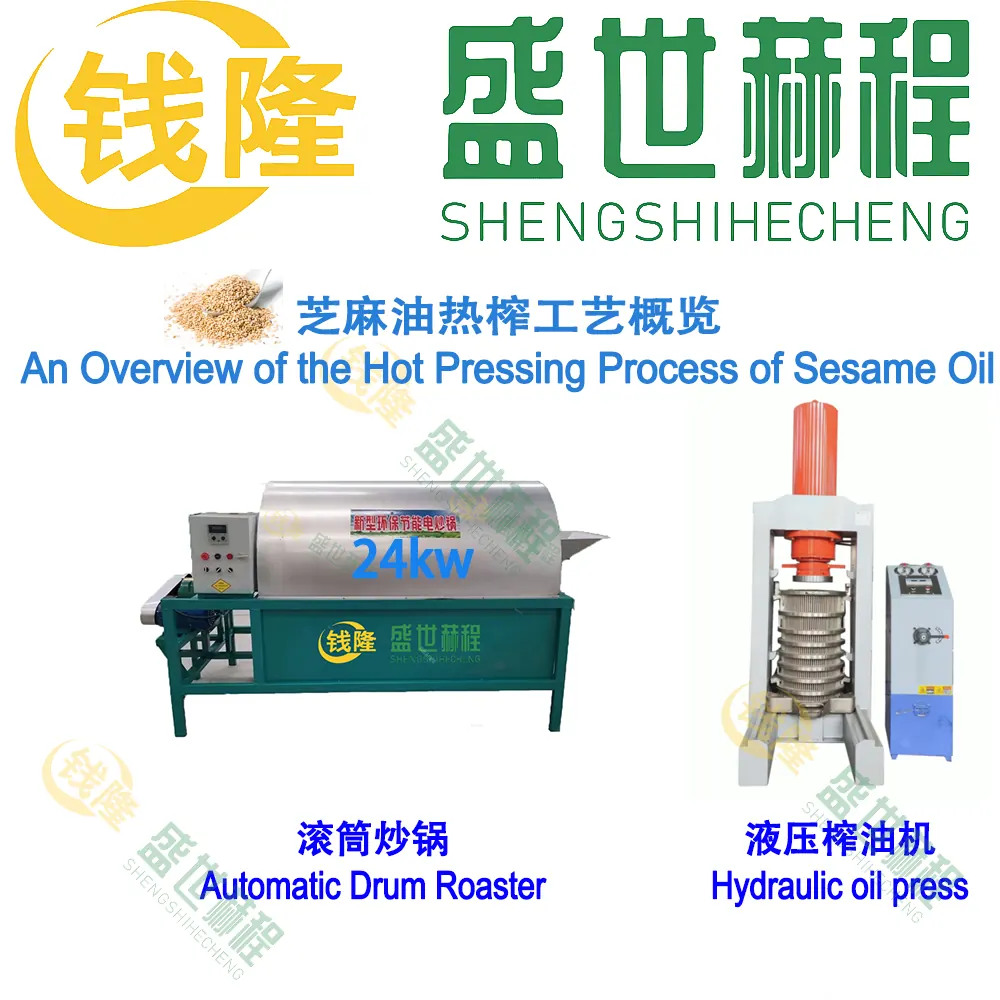
Declare seed color and variety, hulled or unhulled state, moisture, sand and stone contamination, empty or damaged seed, storage condition, and intended product style. Quote capacity on cleaned seed after the agreed washing and drying basis.
Use hydraulic batch pressing where the product depends on a controlled roasted-seed recipe or a defined cold-press trial. Do not combine the two specifications in one capacity claim. For higher continuous volume, compare a screw press while retaining the same aroma, color, sediment, and cake acceptance criteria.
Define traditional settled oil or filtered-clear oil, permitted sediment, settling time, color, roasted aroma intensity, burnt notes, and package format. Filtration should meet the target without erasing the selected product style, and all sampling must state the time after pressing.
Record seed identity, cleaning loss, moisture, washing and drying conditions where used, roast and cooling curve, batch charge, cycle time, oil temperature, crude and filtered oil, and cake. Evaluate color, aroma, burnt taste or odor, clarity or sediment after the agreed period, cake discharge, roaster cleanliness, and press cleaning.
Send the sesame type, cleaned input, cold or roasted product target, settling or filtration requirement, utilities, layout, and destination for a product-specific quotation.
Recommended next step
Connect pretreatment, pressing, filtration and packaging into one practical production route.
Check hot-press, cold-press and small-shop models by batch capacity.
Open pageMatch cleaning, crushing, roasting, pressing, filtering and filling equipment.
Open pageCompare price, capacity, process, operation and startup requirements.
Open pageSend the material, target output and destination for a matched factory quote.
Request quoteReview additional machine, process and buyer resources on hydraulic-oil-press.com.
Open website