Plan a complete production line
Match cleaning, crushing, roasting, pressing, filtering and filling equipment.
Open page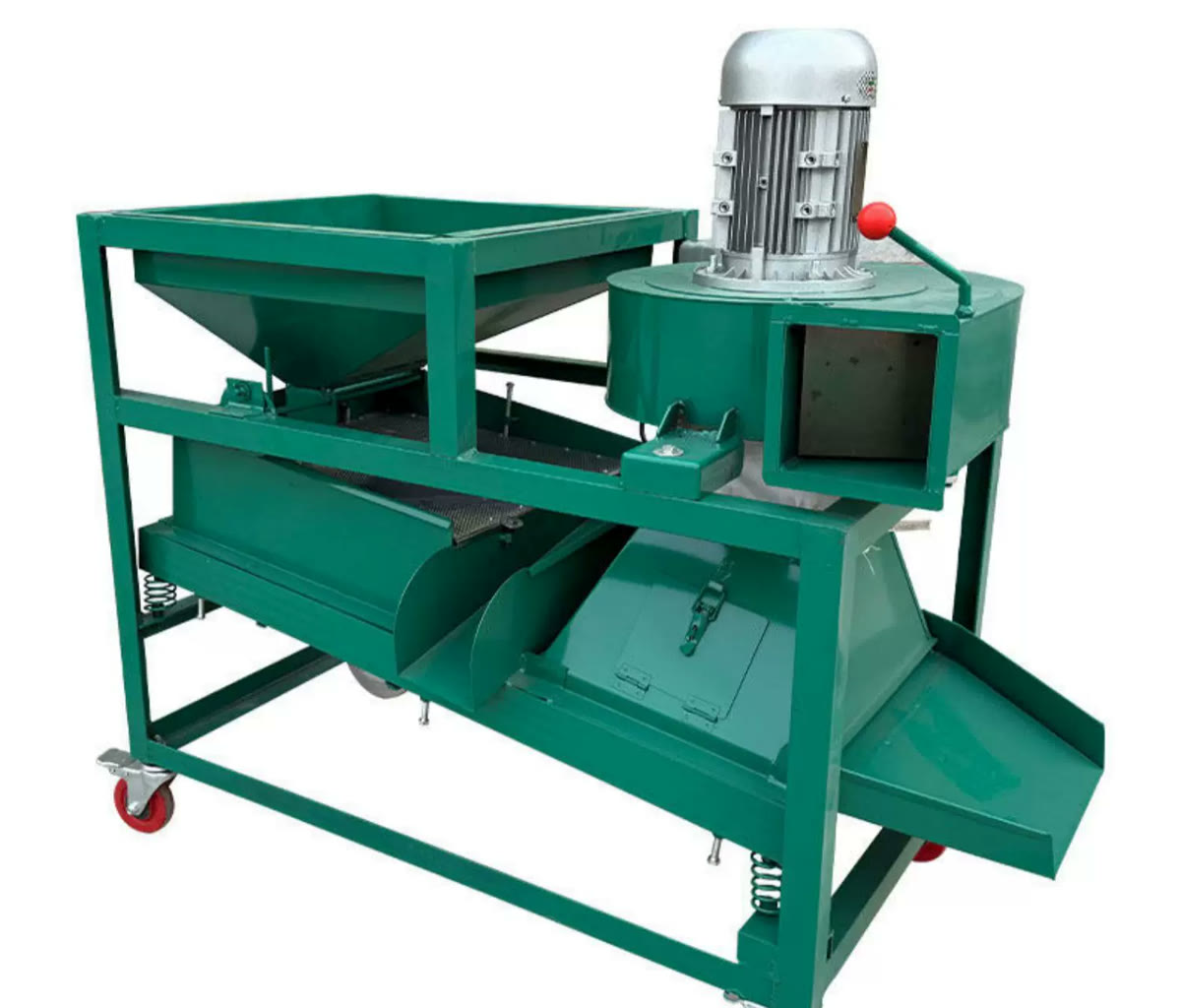
This sesame screening machine combines vibration screening and air dust removal to separate straw, shells, oversize pieces, fine particles and light dust before washing, roasting or oil pressing. It is suitable for sesame, rapeseed/canola, flaxseed/linseed, millet, perilla seed and similar small grains. Closed, open fixed-screen and open removable-screen structures are available.
The video shows real sesame feeding, vibration screening, air dust extraction and separate discharge. It helps buyers compare sesame screening machine price, manufacturer supply capability, 220V/380V configuration and complete sesame oil line procurement.
This is a size-and-air separation machine. It is effective for straw, hulls, broken particles and loose dust, but it is not a gravity stone separator. If the raw material contains many stones with a size similar to the seed, add a destoner or gravity separator.
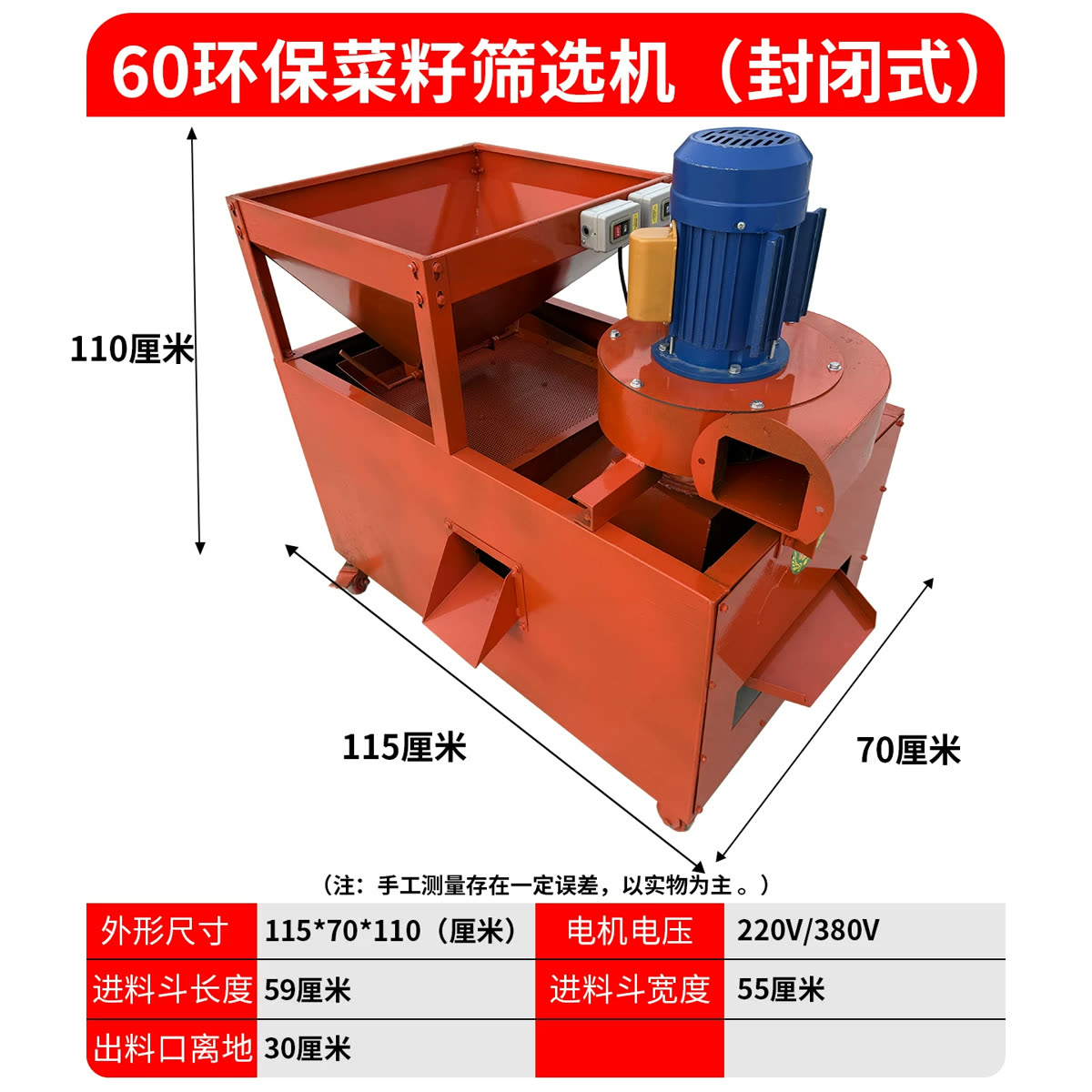
The screen deck is enclosed by metal panels to reduce dust escape and keep the working area cleaner. Available in Model 60, Model 80 and Model 100.
Best for: oil shops and indoor production areas where dust control is important.
The screen deck is exposed for convenient observation and cleaning. The mesh is fixed in the screen frame. Available in Model 60 and Model 80.
Best for: one main raw material with a stable screen-mesh requirement.
The screen frame can be removed, making mesh replacement easier when the machine is used for different seeds. Available in Model 60 and Model 80.
Best for: workshops that process sesame, rapeseed, flaxseed or other materials on the same machine.
The model number is a nominal machine-width class, not hourly capacity. Actual overall width depends on whether the machine is open or closed because the enclosure and fan arrangement add width.
For the open removable-screen version, Model 60 is approximately 63 cm wide and Model 80 is approximately 83 cm wide. For the closed version, the confirmed overall widths are approximately 70 cm and 92 cm. Always use the full dimensions below when planning workshop space.
| Configuration | Maximum capacity | Overall dimensions | Feed hopper | Outlet height | Voltage | Screen |
|---|---|---|---|---|---|---|
| Model 60 closed | Confirm for material | 1150 x 700 x 1100 mm | 590 x 550 mm | 300 mm | 220V / 380V | Double layer |
| Model 80 closed | Up to 1,000 kg/h | 1150 x 920 x 1100 mm | 800 x 560 mm | 300 mm | 220V / 380V | Double layer |
| Model 60 open removable | Confirm for material | 1250 x 630 x 1100 mm | Confirm with selected build | Confirm with selected build | 220V / 380V | Double layer, removable mesh |
| Model 80 open removable | Up to 1,000 kg/h | 1420 x 830 x 1120 mm | Confirm with selected build | Confirm with selected build | 220V / 380V | Double layer, removable mesh |
Actual output depends on seed type, impurity level, moisture, screen aperture and feeding rate. Final motor power, packing size and machine weight should be confirmed before production.
| Machine structure | Model 60 | Model 80 | Model 100 |
|---|---|---|---|
| Closed type | 220V or 380V | 220V or 380V | 380V |
| Open fixed-screen type | 220V or 380V | 220V or 380V | Not listed |
| Open removable-screen type | 220V or 380V | 220V or 380V | Not listed |
Model 80 closed with a 220V motor is a commonly selected workshop configuration. For export orders, confirm voltage, phase and frequency first; the motor and control components can then be matched to the destination.
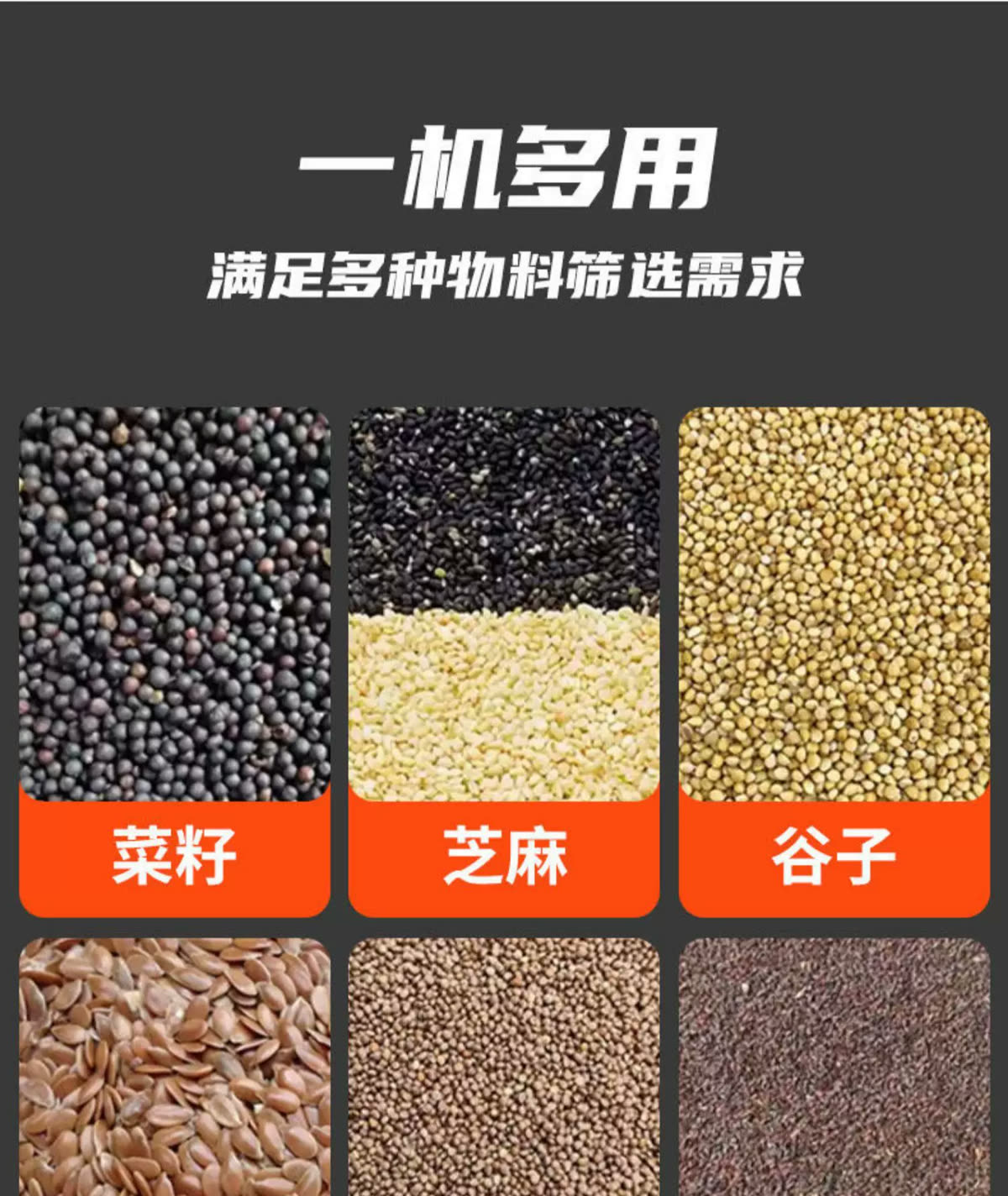
For a complete front-end cleaning system, the screening machine can be matched with sesame washing and drying equipment, roasting equipment, small sesame oil press machine and pneumatic oil filter.
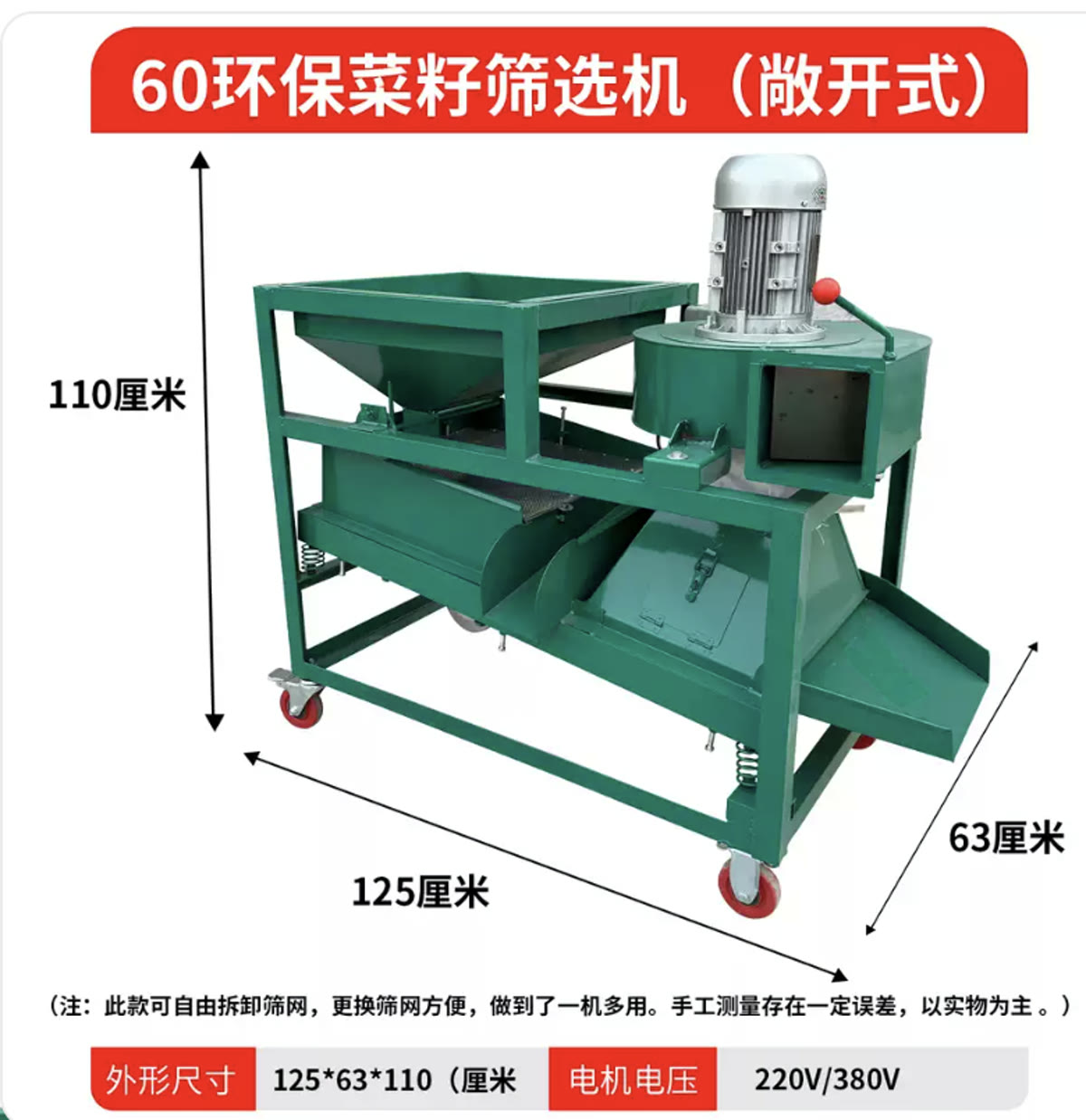
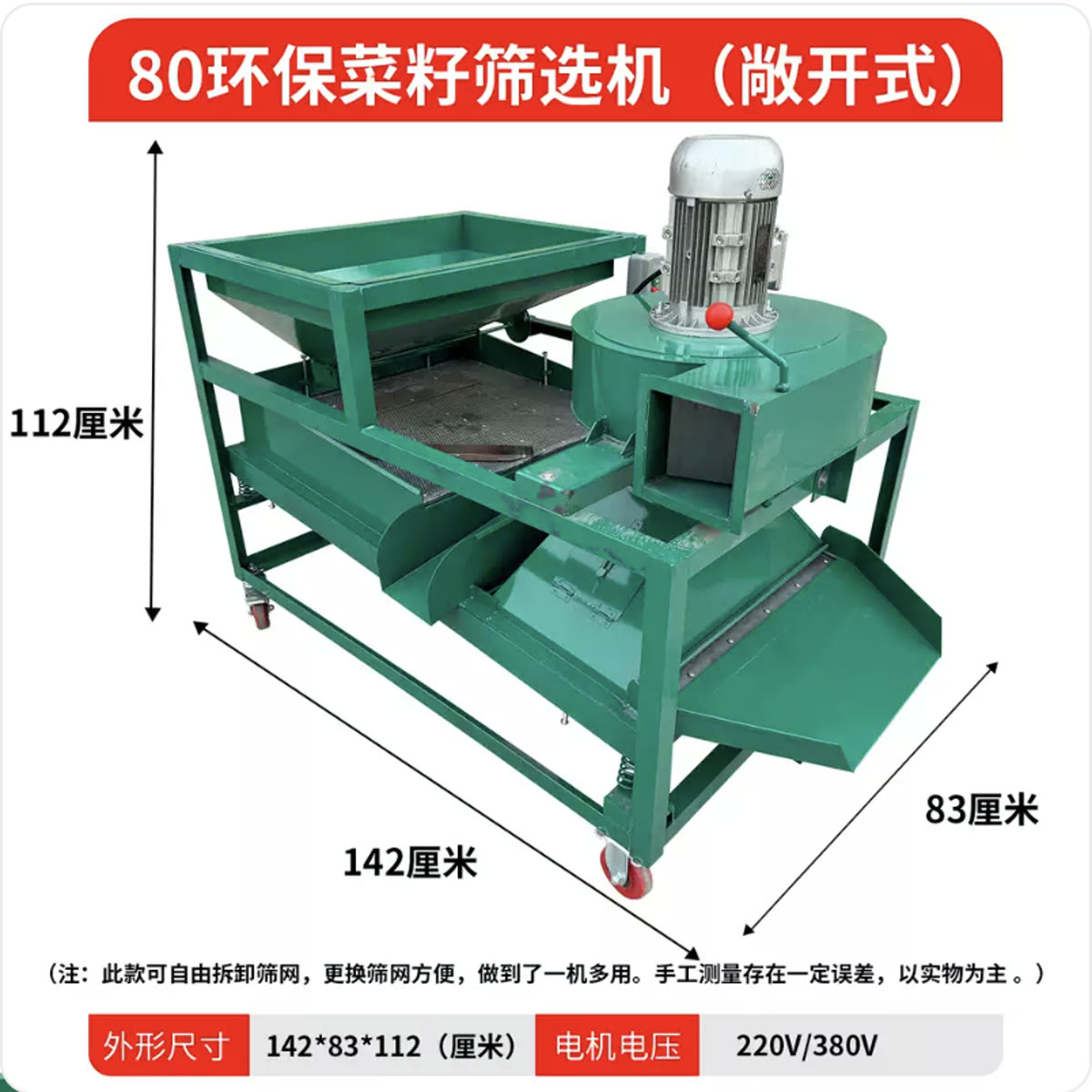
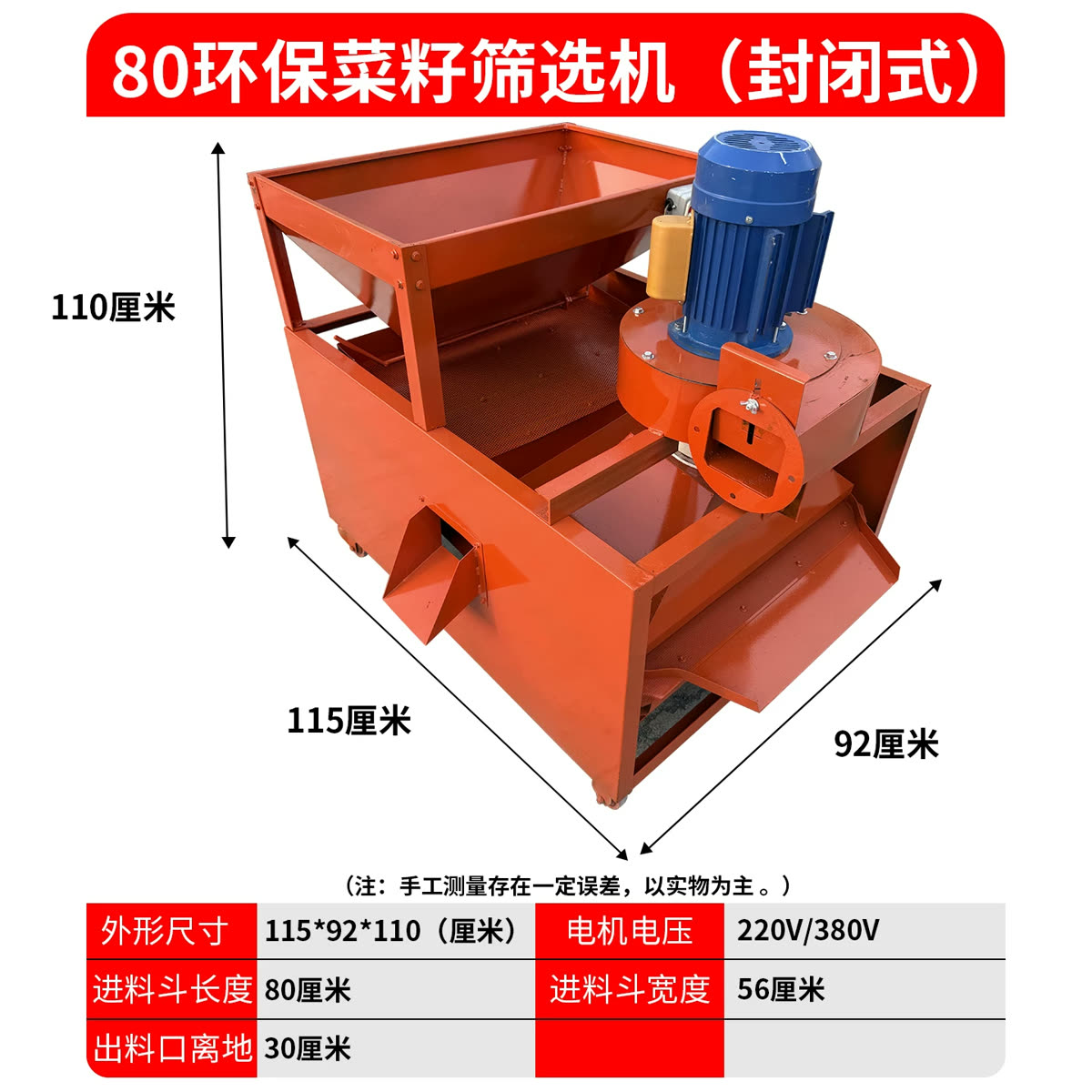
No. Model 80 refers to the nominal width class, not an 80 kg/h rating. Its maximum screening capacity is approximately 1,000 kg/h, depending on material and screen configuration.
A fixed screen is suitable when one material and one mesh aperture are used most of the time. A removable screen frame is easier to take out and replace when processing different seeds.
It can separate particles that are clearly larger or smaller than the seed. Stones similar in size and weight to the seed require a gravity destoner or another dedicated separation step.
Selected Model 60 and Model 80 configurations are offered in 220V and 380V. Confirm phase, frequency and local electrical standard before the machine is manufactured.
Yes. The mesh aperture should be chosen according to the seed size and the impurities that must be removed. A sample or clear raw-material photos help us recommend the correct screen.
Send us the raw material name, photos or video of its impurities, required hourly output, local voltage and whether you need fixed or replaceable screens. We will recommend the model, mesh aperture and matching sesame oil processing equipment.
Recommended next step
Compare the right capacity, confirm the raw-material process and request a factory configuration before ordering.
Match cleaning, crushing, roasting, pressing, filtering and filling equipment.
Open pageReview preparation and pressing routes for seeds, nuts and specialty materials.
Open pageCompare price, capacity, process, operation and startup requirements.
Open pageSend the material, target output and destination for a matched factory quote.
Request quoteReview additional machine, process and buyer resources on hydraulic-oil-press.com.
Open website