Plan a complete production line
Match cleaning, crushing, roasting, pressing, filtering and filling equipment.
Open page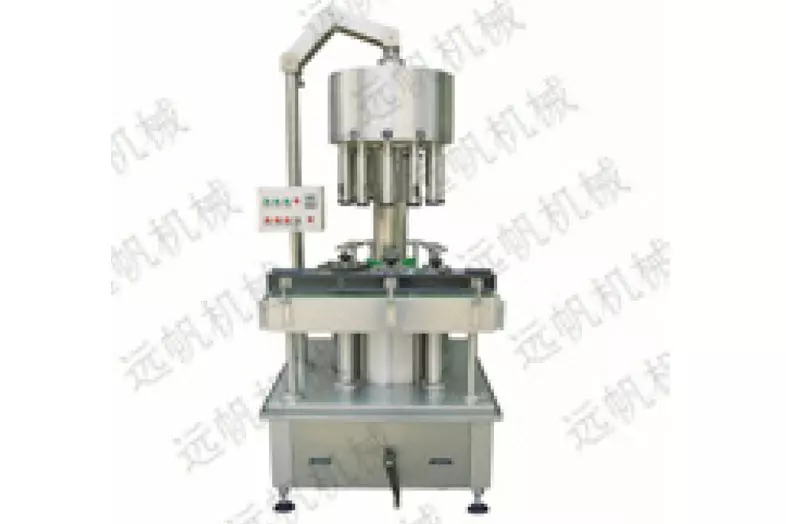
GFP-12A is the A variant of the 12-head low-vacuum, constant-level series. Its published references are 3,000 bottles/hour, 1.12 kW and 1045 x 1050 x 2200 mm. Those figures are useful for an initial shortlist, but the purchase decision should be based on a run with the actual liquid and rigid bottle rather than the model name alone.
Low-vacuum constant-level filling meters to a visible level rather than to mass. The published 3,000 bottles/hour figure is a reference condition, not a guaranteed complete-line result.
The table is retained exactly as published. Final compatibility, sustained output and supplied components must be stated in the technical quotation and acceptance protocol.
| Project | Parameters |
|---|---|
| Model | GFP-12A |
| Number of filling heads | 12 |
| Reference output | 3000 bottles/hour |
| Total power | 1.12 kW |
| Dimensions | 1045×1050×2200 mm |
| Filling method | Low vacuum/constant level filling |
| Applicable liquids | Wine, rice wine, soy sauce, vinegar and other easily foaming liquids |
Begin with the actual container. The bottle must be rigid enough for controlled lifting, and its neck finish must locate and seal at the filling valve. Use this level-filling method only after a non-carbonated liquid has shown acceptable flow and foam behavior. Wine, rice wine, vinegar or soy sauce are possible test products, not blanket approvals.
Send liquid at the lowest and highest expected filling temperatures. If it contains pulp, crystals or suspended solids, moves only at very high viscosity, carries carbonation, or must be sold by net mass, ask the manufacturer to propose a different metering principle.
Twelve heads describe the public configuration, not bottle breakage, fill accuracy, cleaning effort or achieved line speed. Put each of those items behind a sample-based acceptance test.
For a 12-head project, first balance the filler with bottle rinsing or manual bottle supply and the chosen corker or capper. A short accumulation section may be more useful than specifying a faster downstream machine that repeatedly stops the filler.
For the compact line drawing, mark who supplies the filtered-liquid tank, feed and return connections, vacuum arrangement and drain. Add bottle-rinser discharge height, guide widths, conveyor direction and the handoff into the corker or capper. Electrical voltage, frequency, control signals, guards and plant utility points must appear on the same scope sheet.
For every planned bottle, list the lifting and guide parts that change. The cleaning schedule should name wetted materials, seals, removable valve pieces, drain points and whether cleaning is manual or connected to a defined CIP circuit.
A useful GFP-12A price request contains the liquid specification, viscosity and foam observations; empty and filled bottle samples; neck, height and diameter drawings; desired accepted bottles per hour; shift and format-change plan; available floor area; site utilities; destination; and the exact installation or commissioning assistance to be priced.
Run the smallest and largest approved bottles, including the least stable bottle base, at the agreed liquid temperature. Record sustained speed, liquid-level spread, foam or overflow, bottle handling and stop-restart behavior.
Write the FAT around the sample set rather than a catalogue demonstration. State run time, normal operating rate, fill-level inspection method, permitted foam or overflow, rejected-bottle accounting and the response to a controlled downstream stop. SAT should confirm the agreed connections and repeat unresolved operating cases under site conditions.
The quoted amount will change with format parts, product-contact scope, guarding, controls, conveyors, export documentation and destination. Packing, delivery, installation, training, warranty, commissioning spares and later support have no implied inclusion; each belongs in the supplier's written offer and contract.
Price the GFP-12A against your real bottles. Submit the sample list, liquid data and required accepted rate through the project inquiry form.
Recommended next step
Compare the right capacity, confirm the raw-material process and request a factory configuration before ordering.
Match cleaning, crushing, roasting, pressing, filtering and filling equipment.
Open pageReview preparation and pressing routes for seeds, nuts and specialty materials.
Open pageCompare price, capacity, process, operation and startup requirements.
Open pageSend the material, target output and destination for a matched factory quote.
Request quoteReview additional machine, process and buyer resources on hydraulic-oil-press.com.
Open website