Plan a complete production line
Match cleaning, crushing, roasting, pressing, filtering and filling equipment.
Open pageShandong Shengshi Hecheng Machinery Co., Ltd. provides a complete hydraulic oil press product line covering small workshops, commercial oil mills, and integrated oil processing projects.
| Procurement requirement | Recommended pages | Typical project | What to confirm in the quote |
|---|---|---|---|
| Small oil shop or trial production | 300 Series, 325 Series | Small-batch production, retail shops and pilot projects | Machine price, barrel configuration, voltage and delivery time |
| Premium cold-pressed oil | 355 Series, 400 Series, 426 Series, 480 Series, 500 Series | Walnut, tea seed, flaxseed, almond and other high-value materials | Pressure basis, batch repeatability, crushing and filtration scope |
| Complete processing line | Production Lines Overview | New oil mills, expansion projects and export procurement | Pretreatment, pressing, filtration, refining and filling equipment list |
| Spare parts or expansion | Contact the Manufacturer | Existing equipment owners and repeat buyers | Part identification, service scope, maintenance plan and lead time |
Use the following hub pages to move from a single machine inquiry to a complete process layout:
A model number or structural specification does not establish a fixed output or oil yield. First confirm effective barrel dimensions, batch load, rated pressure, heating and temperature-control method, motor power, filtration equipment and planned working schedule. Then test the proposed process with the buyer's actual material.
An entry model family for comparing barrel size, loading method, voltage and basic auxiliary equipment in a small oil mill or workshop. Actual batch load and cycle time depend on the material and test record.
View Complete 300 Series Introduction
Provides additional structure and configuration choices for small and medium oil mills. Compare batch load, complete cycle time and supporting equipment with the same raw-material lot.
View Complete 325 Series Introduction
Suitable for cold-press projects that need to compare barrel specification, rated pressure and planned shifts. Structural differences should not be converted into a fixed production increase without testing.
View Complete 355 Series Introduction
Offers temperature-control and automation options for buyers evaluating workflow, batch consistency and auxiliary-equipment requirements. Confirm output and recovery with the buyer's material.
View Complete 400 Series Introduction
For projects comparing larger configurations and automation options. Verify barrel dimensions, pressure values, batch load and planned cycle before ordering.
View Complete 426 Series Introduction
A heavier configuration where the frame, cylinder, barrel and hydraulic-system values should be reviewed together. Use consecutive test records to evaluate batch stability.
View Complete 480 Series Introduction
A larger hydraulic press configuration for projects with corresponding structure and operating requirements. Evaluate throughput, energy use and maintenance intervals under the intended conditions.
View Complete 500 Series Introduction
Retail-focused small hydraulic press family for sesame oil shops, supermarket fresh oil counters, and compact premium oil businesses.
Match equipment by process stage:
Review cylinder components, pressure-area-force calculations and the procurement checks behind a hydraulic press specification.
Read the hydraulic cylinder principle guide
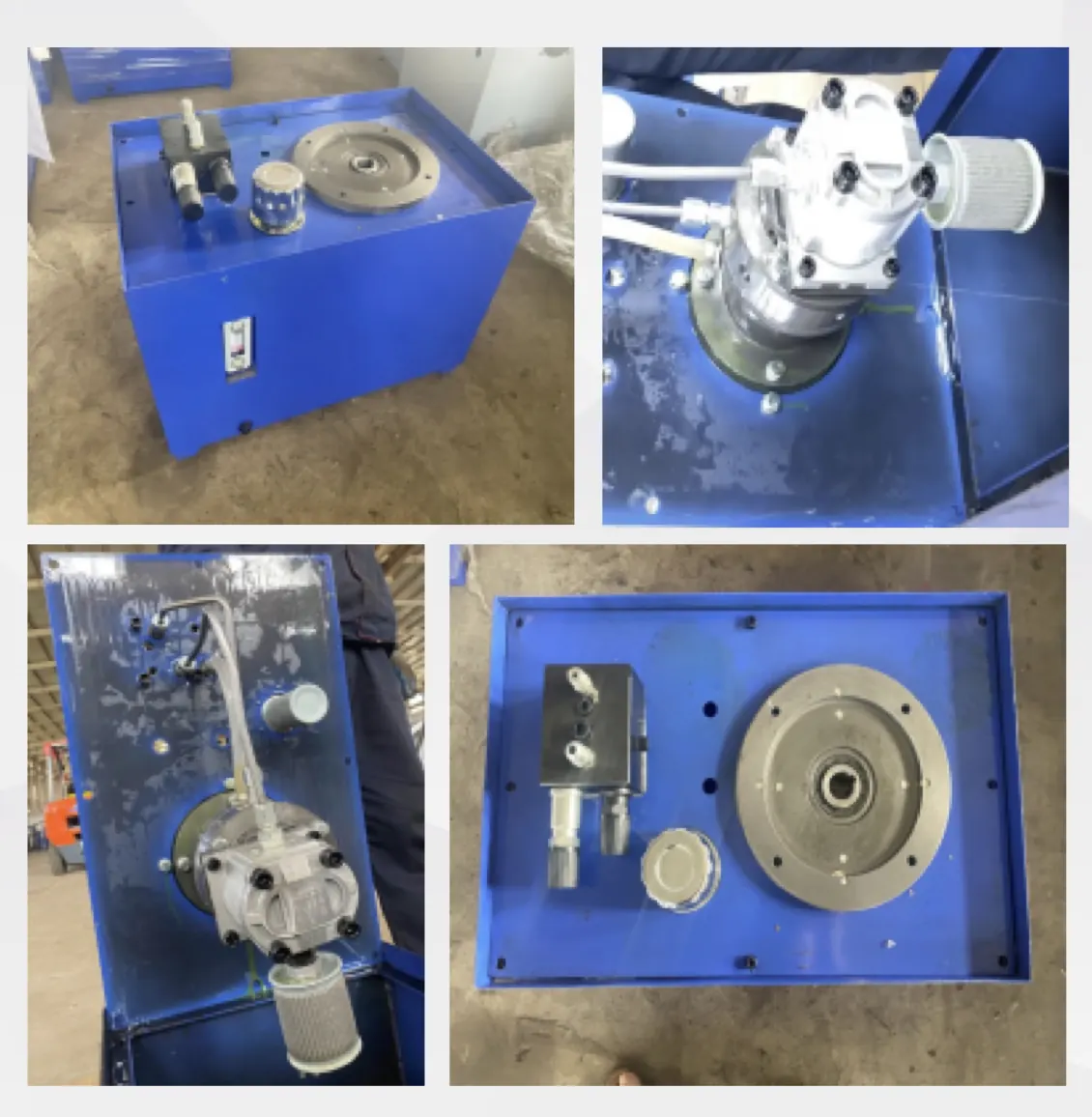
The pictured pump station is a reference configuration. Final component brands, models and parameters should be recorded in the confirmed quotation or technical agreement.
| Component | What to verify before ordering |
|---|---|
| Pump station | Pump model and type; rated pressure and flow; tank capacity; relief and directional valves; cooling method; gauge range; hydraulic diagram; agreed pressure-build and holding-test conditions. |
| Hydraulic cylinder | Bore, stroke and rated pressure; cylinder-tube and piston-rod materials and surface treatment; seal model; mounting dimensions; drawing; agreed pressure-holding and leakage-check conditions. |
| Control box | Supply voltage and frequency; controller or PLC model; electrical component part numbers; emergency stop, overload and pressure protection; interface language; wiring diagram. |
| Material barrel | Effective diameter, height and batch volume; product-contact material; drainage-bar and gap specification; flange or reinforcement; cleaning and replacement method. |
| Motor | Rated power, voltage, phase, frequency, speed, duty and protection class; nameplate; applicable certification; loaded-test basis. |
| Wearing parts | Included item names, part numbers, dimensions, materials and quantities; compatibility with the selected model; recommended startup spares, unit price and lead time. |
Send the manufacturer:
Recommended next step
Compare the right capacity, confirm the raw-material process and request a factory configuration before ordering.
Match cleaning, crushing, roasting, pressing, filtering and filling equipment.
Open pageReview preparation and pressing routes for seeds, nuts and specialty materials.
Open pageCompare price, capacity, process, operation and startup requirements.
Open pageSend the material, target output and destination for a matched factory quote.
Request quoteReview additional machine, process and buyer resources on hydraulic-oil-press.com.
Open website