Plan a complete production line
Match cleaning, crushing, roasting, pressing, filtering and filling equipment.
Open page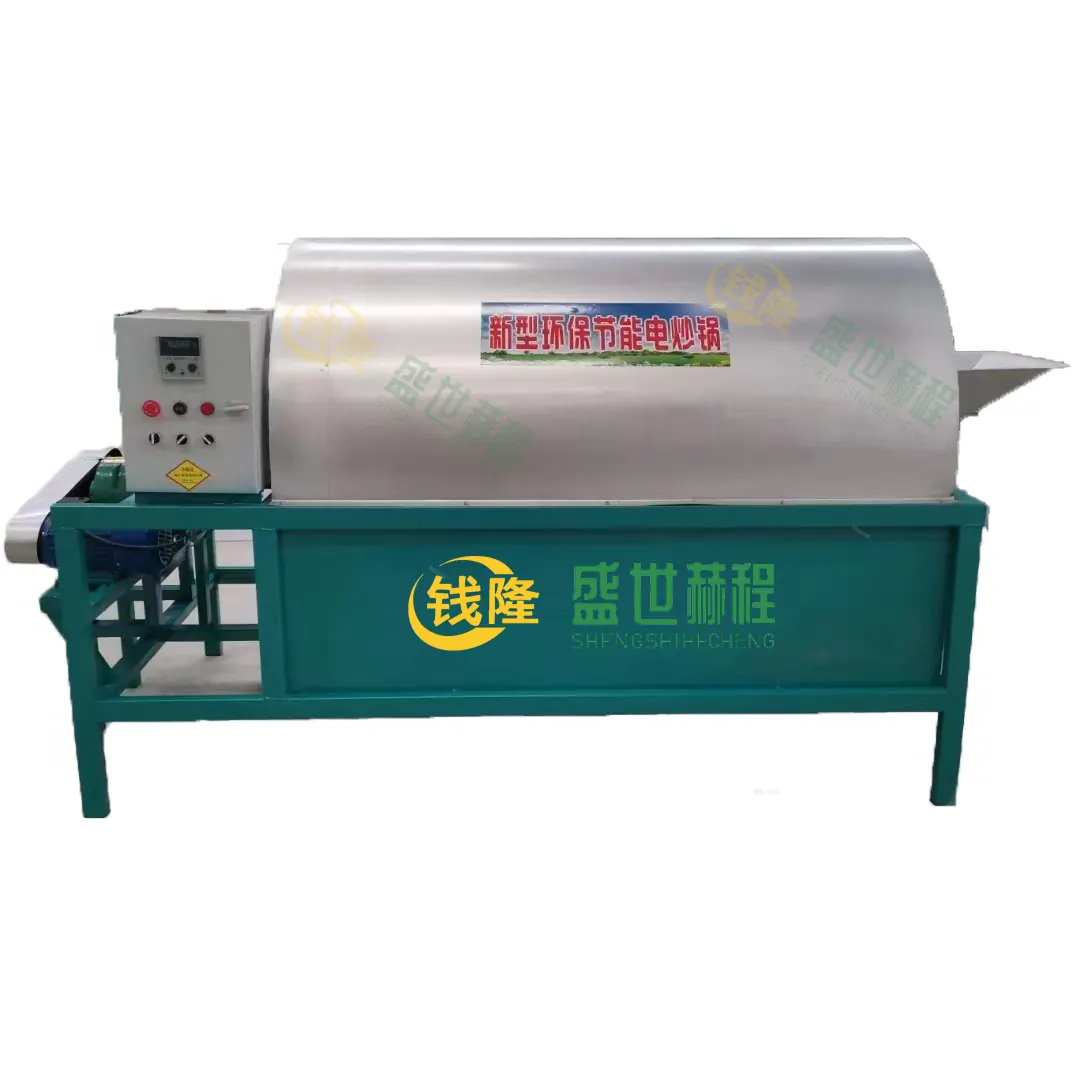
The drum roaster uses electromagnetic heating with selectable power levels. The quotation must identify the supplied controller, sensors, alarms, drive, loading and discharge arrangement, because these functions vary by configuration. Heating rate, temperature distribution, energy use, and labor requirement are verified by an agreed material test rather than assumed from the heating method.
Suitable for roasting various materials, including:
Use a representative raw-material lot and record material type, particle size, moisture, batch mass, drum speed, power level, temperature profile, and the complete cycle from loading through roasting, discharge, cleaning, and restart. The FAT/SAT protocol must define continuous test duration, allowed stops, sensor and scale calibration, sampling positions, temperature tolerance, product endpoint, energy measurement in kWh/batch or kWh/t, and acceptance tolerance. Energy use, staffing level, and risk-control functions are acceptance items only when measurable criteria are included in the signed contract.
The manufacturer quotation should list capacity basis, contact materials, controls, guards, dust or exhaust interfaces, voltage and frequency, accessories, packing, delivery, spares, warranty, and after-sales channels. Remote support and any on-site commissioning or training are supplied only when the written quotation and contract confirm region, travel, visas, lodging, fees, duration, work content, buyer utilities, and acceptance responsibilities; unlisted services are not included.
Here is the video demonstration:
Recommended next step
Compare the right capacity, confirm the raw-material process and request a factory configuration before ordering.
Match cleaning, crushing, roasting, pressing, filtering and filling equipment.
Open pageReview preparation and pressing routes for seeds, nuts and specialty materials.
Open pageCompare price, capacity, process, operation and startup requirements.
Open pageSend the material, target output and destination for a matched factory quote.
Request quoteReview additional machine, process and buyer resources on hydraulic-oil-press.com.
Open website