Plan a complete production line
Match cleaning, crushing, roasting, pressing, filtering and filling equipment.
Open page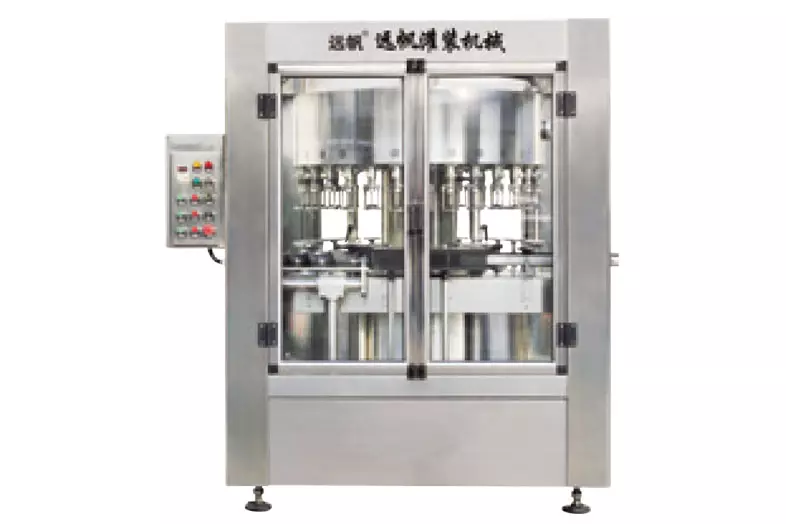
GFP-30H publishes 30 filling heads, a 7,000 bottles/hour reference, 2.5 kW total power and 2100 x 2170 x 2200 mm dimensions. Its head count should not be converted directly into a guaranteed line output. Bottle spacing, fill time, foam settling and downstream interruptions all have to be represented in the supplier's technical offer.
Low-vacuum constant-level filling meters to a visible level rather than to mass. The published 7,000 bottles/hour figure is a reference condition, not a guaranteed complete-line result.
The table is retained exactly as published. Final compatibility, sustained output and supplied components must be stated in the technical quotation and acceptance protocol.
| Project | Parameters |
|---|---|
| Model | GFP-30H |
| Number of filling heads | 30 |
| Reference output | 7000 bottles/hour |
| Total power | 2.5 kW |
| Overall dimensions | 2100×2170×2200 mm |
| Filling method | Low vacuum/constant level filling |
| Applicable liquids | Wine, rice wine, soy sauce, vinegar and other easily foaming liquids |
Treat GFP-30H as a low-vacuum level-filler candidate only when the package is rigid and the beverage or condiment is non-carbonated. Valve sealing, bottle-mouth quality and the relation between neck geometry and target level have to be proven. Foaming liquids can be investigated, but viscosity, fill temperature and surfactants must be represented in the sample.
Gas-bearing products need an appropriate pressure process. Suspended material, pulp and crystals call for a passage designed for solids; high viscosity may favor pump or piston dosing; and mass-controlled sales need a weighing approach. Do not force those applications into the GFP selection.
Thirty heads must not be translated into a linear capacity formula. Use the supplier's test data for each format and count only bottles meeting the acceptance rule.
The control narrative should explain how GFP-30H slows, stops and restarts when the labeler or closing machine is unavailable. Define buffer length and reject handling rather than relying on head count to absorb line interruptions.
For GFP-30H, document how a labeler or bottle dryer recovers after the filler changes speed. The line description should state accumulation zones, discharge spacing, reject route, coder trigger and the interlocks with corking or capping. Upstream, define filtration, product availability, feed condition and ownership of the buffer vessel.
A changeover sheet should list parts, reference settings and sanitation actions by SKU. Include gasket compatibility, drainability, retained-product handling and the method used to verify that cleaning is complete before the next batch.
Send prospective manufacturers a format matrix rather than a single sample: each liquid, bottle, neck, level, closure, label and required accepted rate. Add batch sizes, cleaning sequence, line drawing, utilities, controls standard, factory destination, export packing needs and the installation, commissioning or training tasks that must be quoted.
During FAT, sample bottles at the beginning, middle and end of the run. Check whether level consistency and foam behavior remain within the written limits after speed changes and controlled downstream stops.
Sample the beginning, steady middle and final portion of the FAT run. The protocol should test normal speed, a planned rate change and a downstream stop, while recording accepted output, liquid level, foam, spills and bottle rejects. SAT confirms site integration using the contract's remaining checks.
A defensible comparison separates hardware price from project scope. Ask for line interfaces, bottle-format sets, guards, controls, technical files, spare parts and services as individual commercial items. Lead time, shipping, field labor, warranty duration and response commitments do not exist unless the contract states them.
Request a 30-head configuration and price breakdown. Upload the format matrix through the line quotation form.
Recommended next step
Compare the right capacity, confirm the raw-material process and request a factory configuration before ordering.
Match cleaning, crushing, roasting, pressing, filtering and filling equipment.
Open pageReview preparation and pressing routes for seeds, nuts and specialty materials.
Open pageCompare price, capacity, process, operation and startup requirements.
Open pageSend the material, target output and destination for a matched factory quote.
Request quoteReview additional machine, process and buyer resources on hydraulic-oil-press.com.
Open website