Plan a complete production line
Match cleaning, crushing, roasting, pressing, filtering and filling equipment.
Open pageMatch cleaning, crushing, roasting, pressing, filtering and filling equipment.
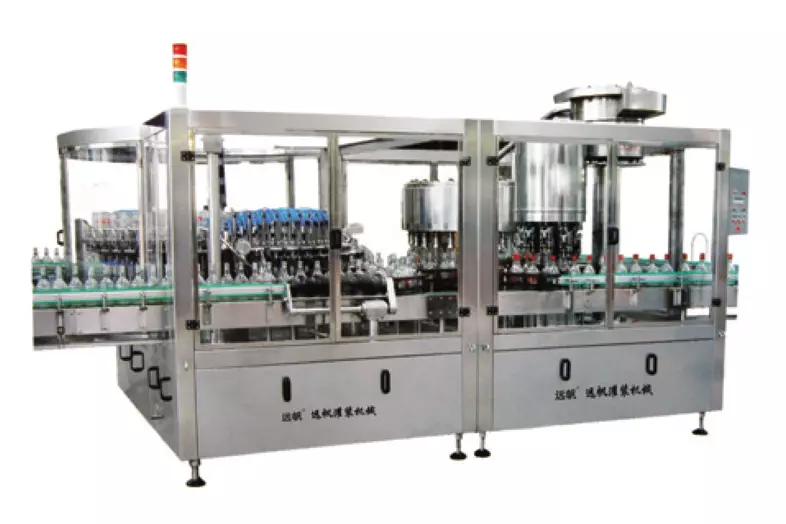
Use this hub to move from a packaged-liquid requirement to the correct rinsing, filling, closing, inspection, labeling and end-of-line equipment. The published values below and on each product page are references for initial comparison, not unconditional output or accuracy guarantees. A manufacturer quotation should be based on the actual liquid, containers, closures, line interfaces and acceptance method.
| Purchasing input | Information to provide | Why it changes the configuration |
|---|---|---|
| Liquid | Product name, viscosity, temperature, foaming tendency, particles and food or chemical duty | Determines the filling principle, contact materials, pump, valves and cleaning method |
| Bottle or container | Material, nominal volume, height, body diameter, neck finish, stability and representative samples | Determines guides, star wheels, nozzles, conveyors and format parts |
| Closure | Cap, press-on cap, tamper-evident cap, cork or shrink capsule; dimensions and feed condition | Determines the cap feeder, pressing, rolling, corking, sealing or shrinking station |
| Label and code | Label material, bottle surface, label position, date or batch-code content and substrate | Determines labeling, inspection and laser-selection requirements |
| Sustained line rate | Required bottles per hour for each format, plus upstream supply and downstream packing rate | Prevents one module from becoming the line bottleneck |
| Changeover | Number of SKUs, change frequency, acceptable downtime and retained-product limit | Affects tooling, adjustment method, cleaning and operator workload |
| Cleaning | Product-change procedure, flush or CIP expectation, drainage, hygiene zoning and contact-material requirement | Affects piping, tank, valve, guarding and documentation scope |
| Complete-line boundary | Required tanks, pumps, conveyors, rinser, filler, closer, dryer, labeler, coder, case packer, palletizer and utilities | Makes supplier quotations comparable and exposes excluded interfaces |
A fully automatic line is not automatically the best purchase. A semi-automatic or modular line can be more practical when formats change often, batches are small or local labor and maintenance capability favor simpler equipment. Automation should follow the operating case, not replace it.
Start with the complete filling and packaging line overview, then open the series that owns each process step.
| No. | Equipment series | Main purchasing decision |
|---|---|---|
| 01 | Bottle washing and rinsing | Bottle condition, internal or external rinse, water circuit and format range |
| 02 | Liquid filling machines | Liquid behavior, dose range, container size and sustained line rate |
| 03 | Bottle light inspection | Defect types, bottle transparency, inspection position and rejection method |
| 04 | Capping and sealing | Closure geometry, feeding, pressing or rolling method and seal criteria |
| 05 | Corking machines | Cork specification, bottle neck, feeding method and required insertion result |
| 06 | Cap rolling and shrinking | Capsule material, dimensions, heat method and line speed |
| 07 | Bottle drying | Residual surface water, bottle shape, air supply and downstream labeling need |
| 08 | Labeling machines | Label stock, bottle geometry, label positions and changeover frequency |
| 09 | Laser coding and marking | Substrate, code content, contrast, line speed and extraction requirement |
| 10 | Packing and palletizing | Case pattern, sealing method, pallet pattern and handoff boundary |
| 11 | Fruit and vegetable preprocessing | Feed material, elevation, washing or sorting duty and downstream connection |
| 12 | Liquid filtration | Inlet solids, required filtrate, media, cleaning and consumables |
| 13 | Wine and beverage bottling | Low-vacuum filling, corking, bottle rinse and line integration |
| 14 | Dairy processing | Product process, heat treatment, hygiene boundary and filling interface |
FAT should use approved samples or a documented substitute and should cover the agreed format range, sustained operating run, changeover, cleaning, safety interlocks and line communication. SAT should verify the installed utilities, interfaces and agreed acceptance method at the destination. Throughput, fill result, closure result, label position, rejection logic and allowed stoppages must be written into the purchase specification before testing.
The following values are retained as published model references. Confirm the liquid, bottle, test duration and acceptance tolerance in the quotation before treating any value as a purchase commitment.
| Model | Public parameter highlights | Application note |
|---|---|---|
| Wine rinsing filling corking monoblock GFP-16-12-1 to GFP-30-24-6 | 2000-6000 p/h; 16-30 rinsing heads; 12-24 low vacuum filling heads; 1-6 corking heads | Integrated wine and fruit-wine bottling layouts |
| Filling and corking monoblock GFP16-1 / GFP24-6 | 2200 / 6000 bottles/hour; 16 / 24 filling heads; 1 / 6 corking heads | Filling followed directly by cork insertion |
| Low vacuum filling machine GFP-12A to GFP-60H | 3000-20000 p/h; 12-60 heads; 1.12-7.5 kW | Non-carbonated liquids such as wine, huangjiu, soy sauce and vinegar |
Series guide: complete filling and packaging line overview
Series guide: bottle washing and rinsing equipment
Series guide: liquid filling machine selection
Series guide: bottle inspection equipment
Series guide: capping and sealing equipment
Series guide: corking equipment
Series guide: cap rolling and shrinking equipment
Series guide: bottle drying equipment
Series guide: labeling equipment
Series guide: laser coding equipment
Series guide: case packing and palletizing equipment
Series guide: fruit and vegetable preprocessing equipment
Series guide: liquid filtration before filling
Specify the inlet solids, required filtrate, operating temperature, cleaning method and consumable-media boundary before requesting a filter quotation. This series currently uses its solution page as the stable selection entry rather than an unsupported product fragment.
Series guide: wine and beverage bottling equipment
Series guide: dairy processing and bottling equipment
Send the liquid data, bottle and closure samples, required rate, line layout, utilities, destination and requested service scope. The reply can then separate machine price, optional modules, delivery, installation, spare parts, FAT/SAT and after-sales terms.
Recommended next step
Compare the right capacity, confirm the raw-material process and request a factory configuration before ordering.
Match cleaning, crushing, roasting, pressing, filtering and filling equipment.
Open pageReview preparation and pressing routes for seeds, nuts and specialty materials.
Open pageCompare price, capacity, process, operation and startup requirements.
Open pageSend the material, target output and destination for a matched factory quote.
Request quoteReview additional machine, process and buyer resources on hydraulic-oil-press.com.
Open website