Compare machine models
Check hot-press, cold-press and small-shop models by batch capacity.
Open pageRaw cottonseed contains lint and a substantial hull fraction. An edible-oil project therefore needs delinting, dehulling, conditioning, pressing or extraction, filtration, refining, and product testing rather than direct cold pressing alone.
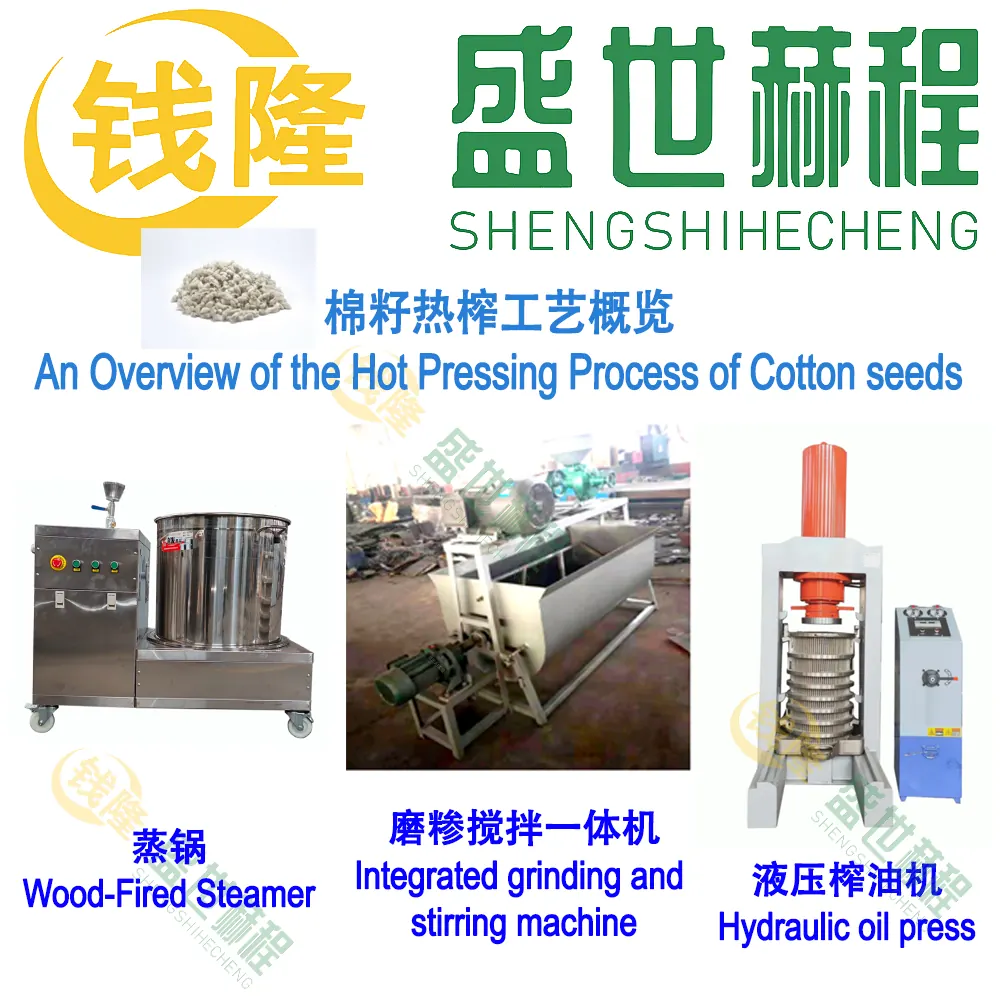
Identify fuzzy seed, delinted seed, decorticated meats, or another prepared feed. Record lint and hull fractions, moisture, impurities, oil analysis if available, storage condition, and the intended oil and meal uses. Crude cottonseed oil is not accepted as edible solely because it has passed through a press or filter.
For commercial duty, compare continuous screw pressing, pre-pressing, or a dedicated extraction route according to feed volume, oil target, and meal value. A hydraulic batch trial may characterize prepared meats but is not the default complete cottonseed process. Crude oil proceeds to solids removal and the refining steps required by the applicable finished-oil standard.
Specify crude filtered oil or refined edible oil, solids, color, odor, moisture, sampling points, and the gossypol test required under the applicable product standard. Define degumming, neutralization, bleaching, deodorization, tank, and packaging scope as required by the project. Meal or cake use must be evaluated separately.
Record cleaning loss, delinting and dehulling result, hull carryover, flake condition, moisture and temperature after conditioning, feed rate or batch charge, crude oil, filtered oil, hulls, and meal or cake. Identify sampling points before and after refining and attach the agreed laboratory results, including gossypol where applicable. Visual inspection at the press is not finished-oil acceptance.
Send the exact cottonseed feed state, lint and hull data, daily input, oil and meal targets, refining and testing scope, utilities, layout, and destination for a complete line quotation.
Recommended next step
Connect pretreatment, pressing, filtration and packaging into one practical production route.
Check hot-press, cold-press and small-shop models by batch capacity.
Open pageMatch cleaning, crushing, roasting, pressing, filtering and filling equipment.
Open pageCompare price, capacity, process, operation and startup requirements.
Open pageSend the material, target output and destination for a matched factory quote.
Request quoteReview additional machine, process and buyer resources on hydraulic-oil-press.com.
Open website