Compare machine models
Check hot-press, cold-press and small-shop models by batch capacity.
Open pagePeanut oil equipment must be sized on cleaned kernels, not in-shell peanuts. The line also needs a defined product route: cold-pressed oil, roasted aromatic oil, or crude oil for further refining. Aflatoxin control begins with raw-material segregation and laboratory testing, not with heating or pressing.
Declare in-shell peanuts or kernels, variety, shell ratio, moisture, impurities, damaged or moldy fraction, storage history, and available aflatoxin results. Reject suspect lots under the buyer's sampling plan. Pressing and roasting must not be represented as aflatoxin treatment.
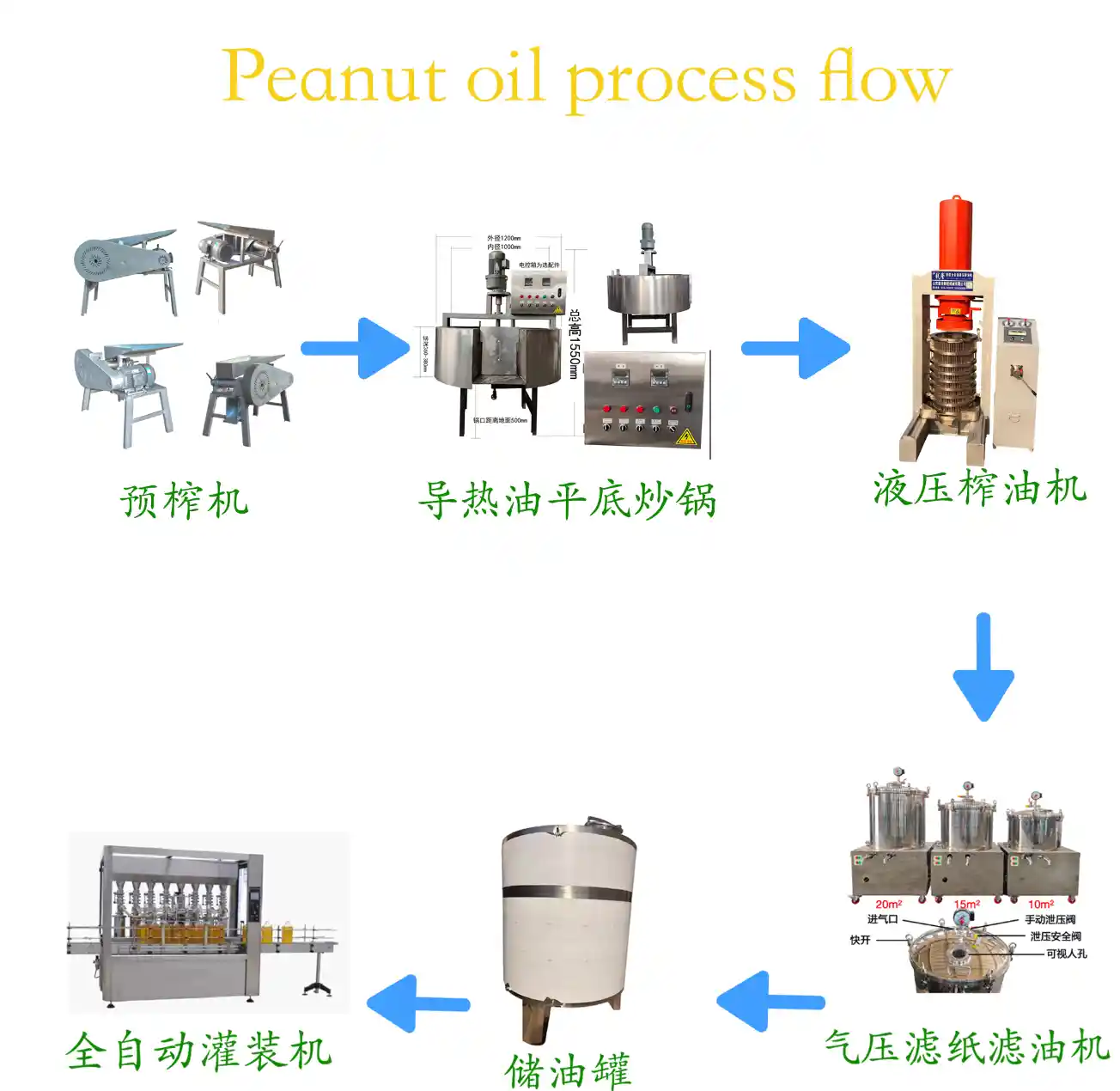
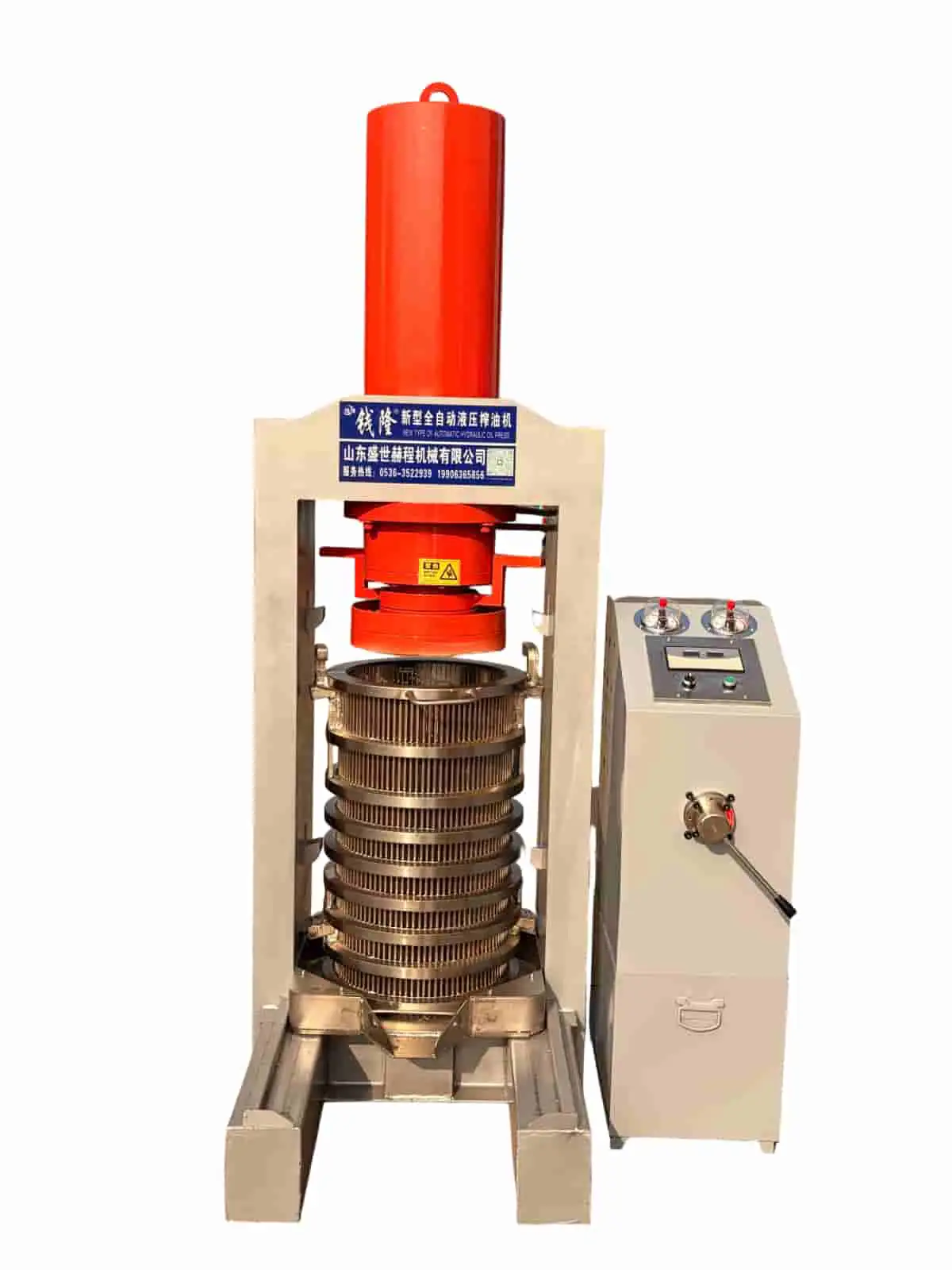
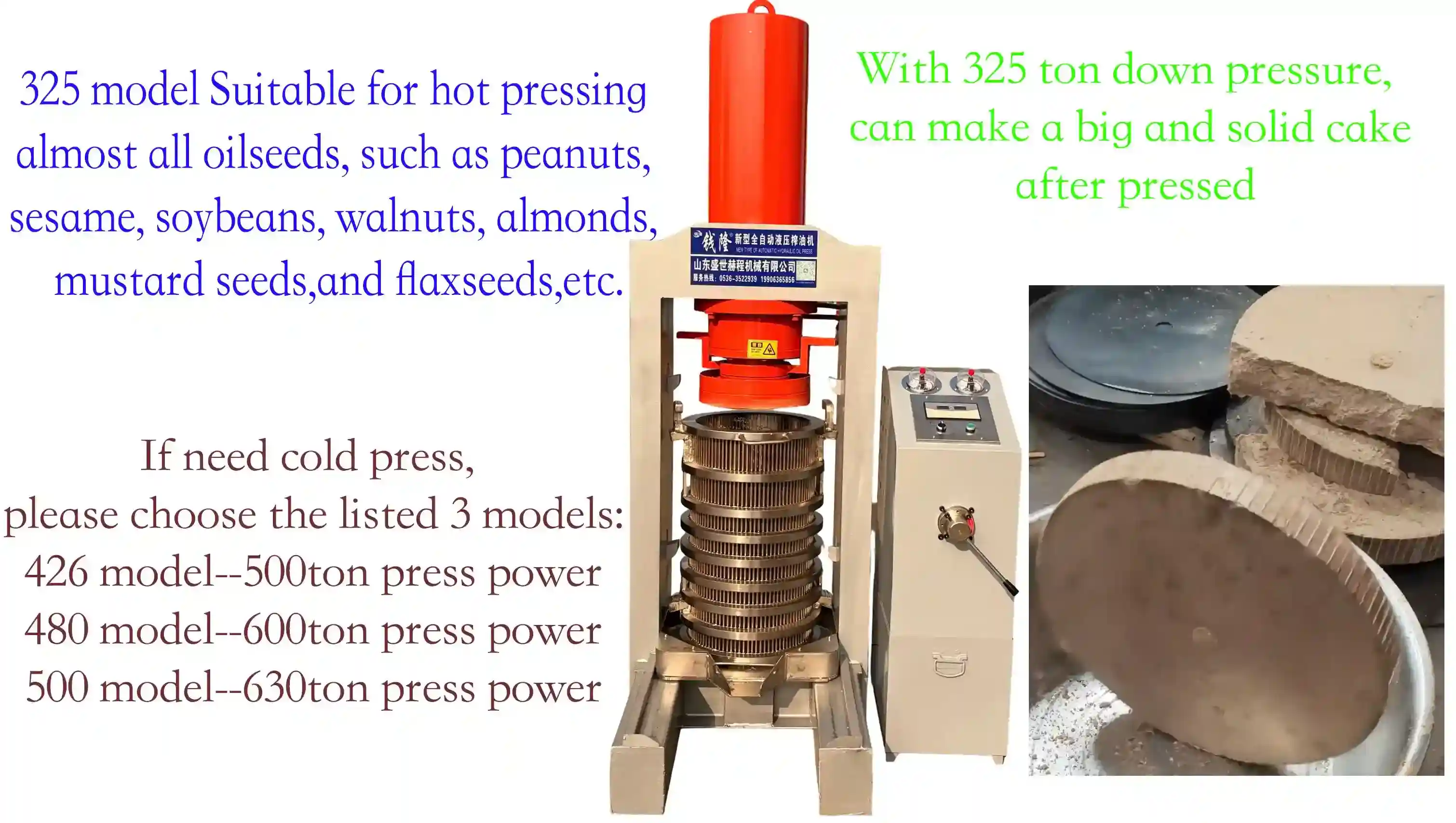
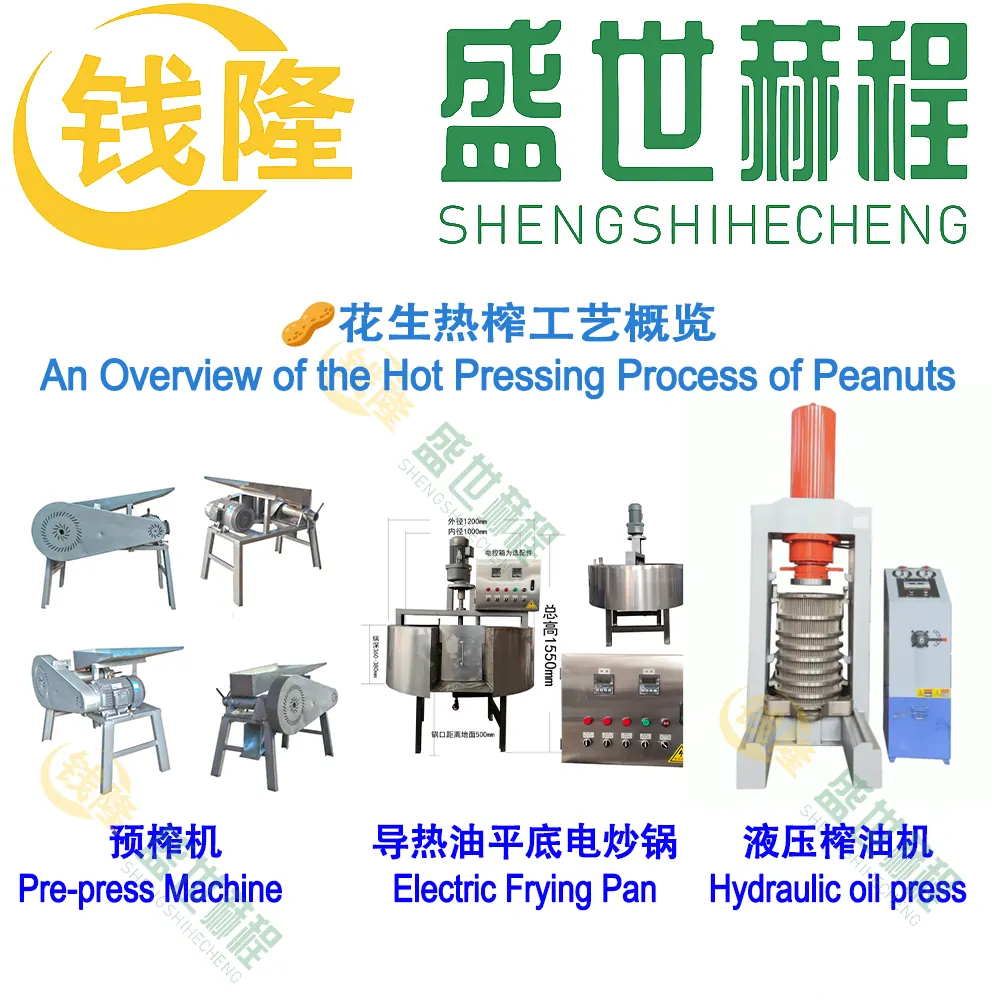
Hydraulic batch pressing suits defined roasted-oil and specialty batch products. A screw press or pre-press route should be compared for continuous commercial throughput. Compare routes on the same approved peanut lot and record clean-kernel input, oil, cake, filtration load, flavor, and operating time.
Specify settled or filtered oil, visible sediment, clarity, color, natural or roasted aroma, burnt notes, and whether refining is included. Define sampling time, tanks, package format, and laboratory tests separately from press operation.
Identify the approved peanut lot and its aflatoxin report. Record shelling and sorting loss, kernel moisture, crush or flake condition, roast or steam-conditioning curve, feed or charge, cycle time, oil temperature, crude and filtered oil, and cake. Evaluate color, natural or roasted aroma, burnt notes, clarity, cake discharge, and cleaning, while keeping contaminant acceptance tied to laboratory results.
Send the approved peanut sample and test data, clean-kernel throughput, product route, filtration and cake scope, utilities, layout, and destination for a line quotation based on the same-lot trial.
Recommended next step
Connect pretreatment, pressing, filtration and packaging into one practical production route.
Check hot-press, cold-press and small-shop models by batch capacity.
Open pageMatch cleaning, crushing, roasting, pressing, filtering and filling equipment.
Open pageCompare price, capacity, process, operation and startup requirements.
Open pageSend the material, target output and destination for a matched factory quote.
Request quoteReview additional machine, process and buyer resources on hydraulic-oil-press.com.
Open website