Compare machine models
Check hot-press, cold-press and small-shop models by batch capacity.
Open pageChili seed is usually recovered from a spice, sauce, or drying process and may contain stems, fruit flesh, dust, salt, or other seasonings. The line must control pungent dust, odor, and cross-contamination as well as oil extraction.
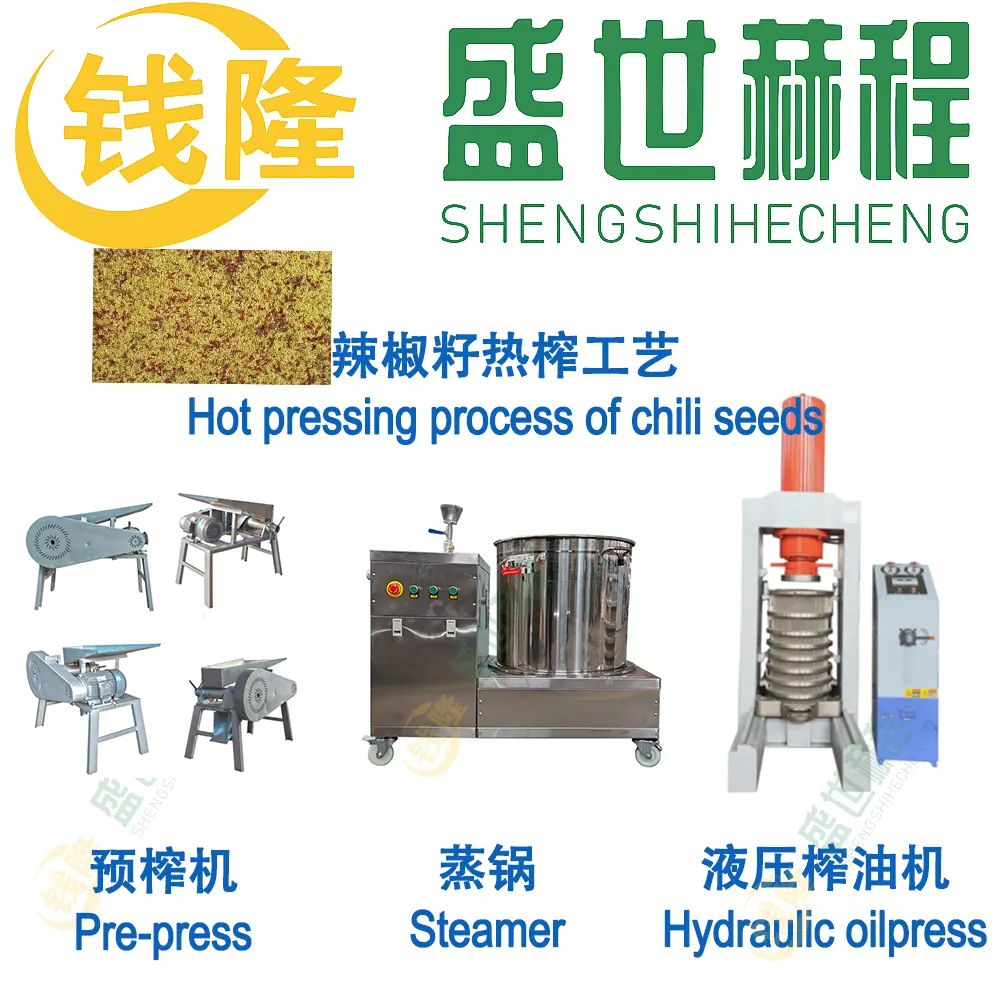
State the chili variety, seed-recovery process, moisture, remaining flesh and stems, dust, salt or additives, storage condition, and intended oil use. Clean dry seed is a different feed from wet sauce residue or mixed spice waste. Quote capacity after removal of non-seed material.
A hydraulic batch route can be evaluated for a specialty chili seed oil after cleaning and conditioning. Compare steam or light roasting with a lower-temperature trial on the same lot. Select equipment from actual charge, cycle, oil, cake, filter loading, odor control, and cleaning records. Use dedicated equipment or a validated changeover plan when other oils share the facility.
Define settled or filtered oil, visible sediment, clarity, color, pungency or aroma profile, sampling time, and intended food or industrial tests. Contact materials, ventilation, product tanks, packaging, and the cleaning endpoint before another product must be included in the specification.
Record incoming and clean-seed weights, removed residue, moisture after drying, grind size, conditioning settings, charge weight, cycle time, oil temperature, crude and filtered oil, and cake. Check color, aroma or pungency, clarity, dust capture, material build-up, filter cleaning, and the documented sanitation result before a different product is processed.
Send the recovered chili seed sample, clean dry throughput, target product, dust and cleaning scope, filtration requirement, utilities, and destination for a trial-based quotation.
Recommended next step
Connect pretreatment, pressing, filtration and packaging into one practical production route.
Check hot-press, cold-press and small-shop models by batch capacity.
Open pageMatch cleaning, crushing, roasting, pressing, filtering and filling equipment.
Open pageCompare price, capacity, process, operation and startup requirements.
Open pageSend the material, target output and destination for a matched factory quote.
Request quoteReview additional machine, process and buyer resources on hydraulic-oil-press.com.
Open website