Compare machine models
Check hot-press, cold-press and small-shop models by batch capacity.
Open pageFresh rice bran changes rapidly after milling because native enzymes increase oil degradation. The project must start with collection time and stabilization, then select pressing, pre-pressing, or a dedicated extraction route. Direct hydraulic pressing is not the default rice-bran process.
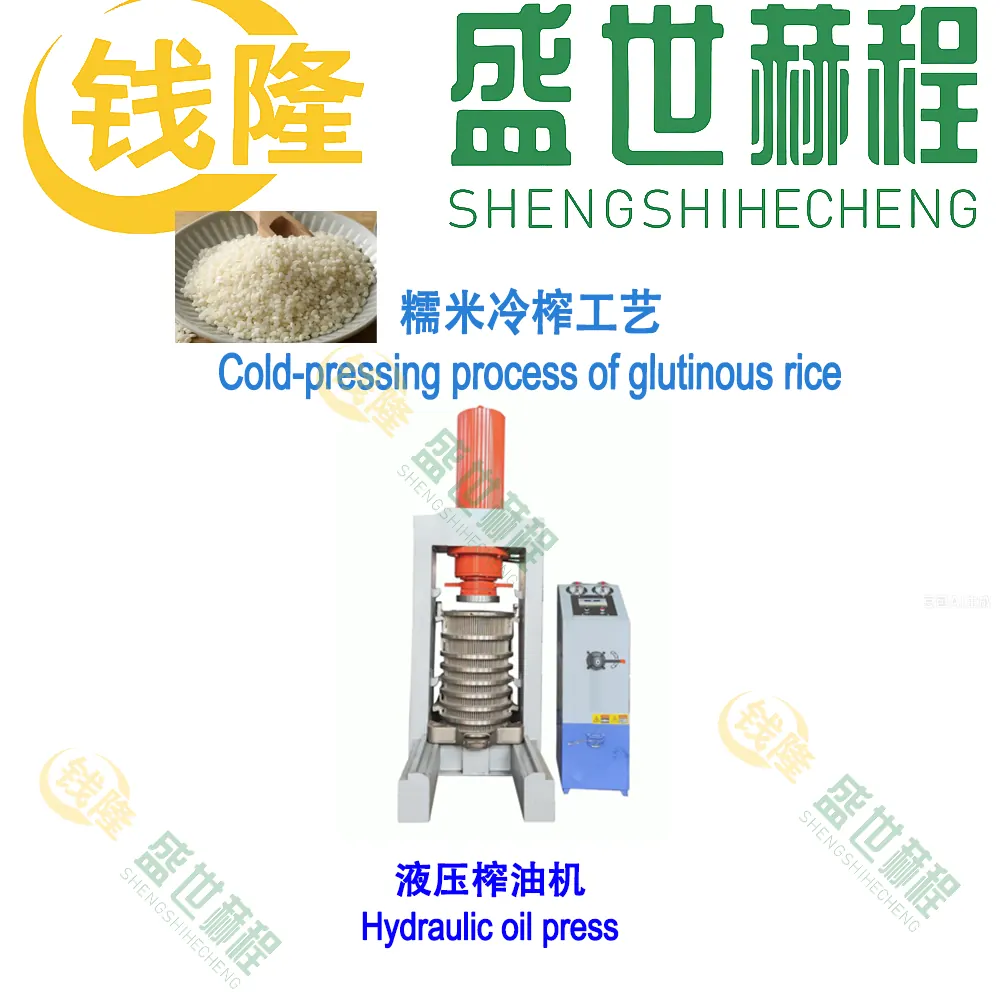
Identify the rice type, milling stage, fresh bran or stabilized bran, husk and fine-flour contamination, moisture, time since milling, storage condition, and available free-fatty-acid data. Quote capacity on stabilized bran or clearly state the fresh-bran basis and stabilization loss.
Choose between pre-pressing, continuous mechanical pressing, or a dedicated extraction route according to stabilized-bran analysis, throughput, fines behavior, oil target, and project economics. A hydraulic sample trial may test compaction and filtration but must not be presented as a universal rice-bran line. Crude oil normally requires filtration, refining, and dewaxing for a stable clear finished product.
Define crude or refined oil, solids, free fatty acid sampling, color, odor, wax removal, and clarity at the agreed storage or cooling condition. The scope should identify filtration, degumming, refining, dewaxing, tanks, and packaging, with sampling points at each contracted stage.
Start the record at bran collection. Log milling time, receipt time, moisture, stabilization temperature and residence time, post-stabilization condition, feed rate, crude oil, and residue using the agreed method. Record free fatty acid at agreed sampling points. After contracted filtration, refining, or dewaxing, evaluate solids and clarity under the specified cooling or storage test rather than only while the oil is warm.
Send the fresh-bran timing, stabilization data, hourly or daily bran volume, extraction and refining target, utilities, layout, and destination for a rice-bran process quotation.
Recommended next step
Connect pretreatment, pressing, filtration and packaging into one practical production route.
Check hot-press, cold-press and small-shop models by batch capacity.
Open pageMatch cleaning, crushing, roasting, pressing, filtering and filling equipment.
Open pageCompare price, capacity, process, operation and startup requirements.
Open pageSend the material, target output and destination for a matched factory quote.
Request quoteReview additional machine, process and buyer resources on hydraulic-oil-press.com.
Open website