Compare machine models
Check hot-press, cold-press and small-shop models by batch capacity.
Open pageThis line is for kernels separated from peach stones. Whole pits, hard shell fragments, and wet fruit residue are different feedstocks and require cracking, separation, and drying modules before a press can be selected.
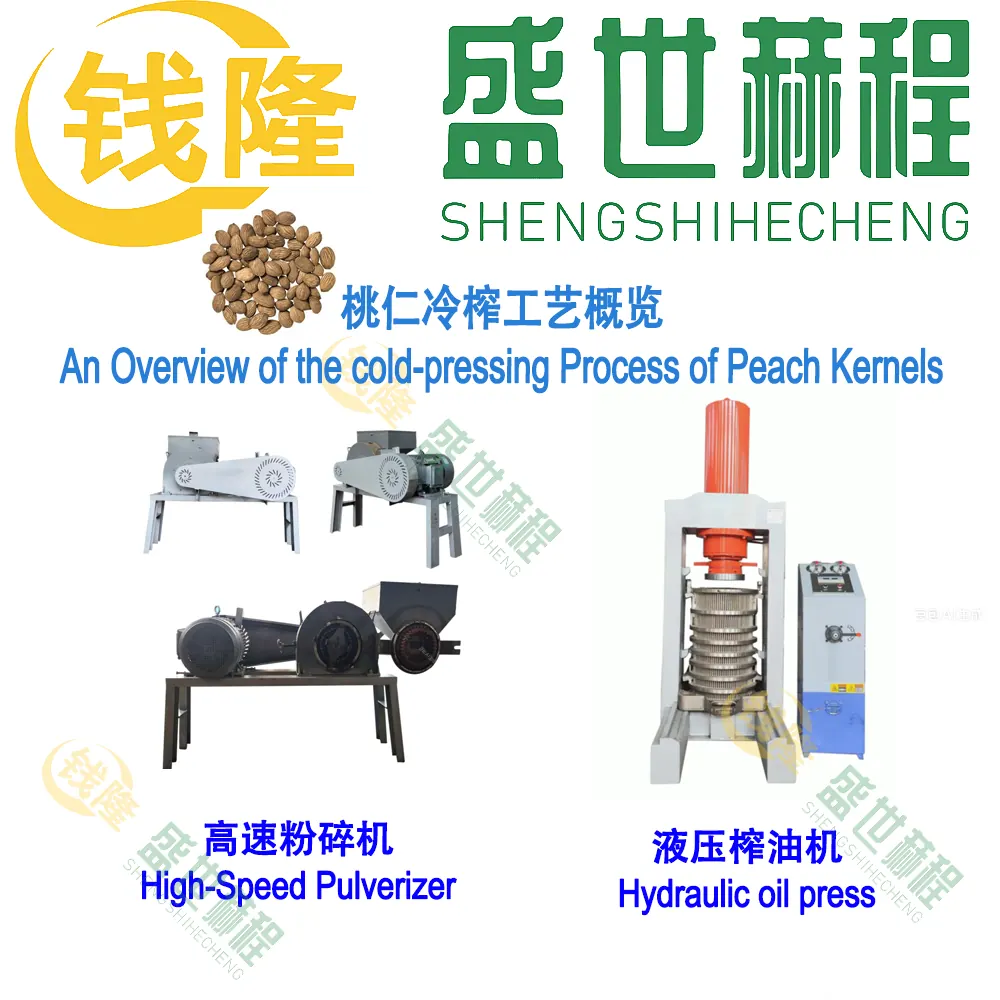
Confirm kernel source, variety, traceability, moisture, residual shell, and intended food, cosmetic, or industrial use. Remove damaged, moldy, discolored, or rancid kernels. Extraction equipment does not replace raw-material safety assessment or finished-oil testing.
Begin with a low-temperature hydraulic batch trial on clean crushed kernels. Compare any gently warmed route on the same sample and judge it by oil color, odor, filtration, cake release, and recorded output. Size the machine from kernel charge data rather than whole-pit throughput.
Define the settling period, filtration grade, visible water and sediment criteria, color, odor, and required laboratory tests for the intended use. Storage and packaging scope should be specified where protection from light and oxygen is part of the product requirement.
Document the approved feed lot, pit-to-kernel basis if applicable, residual shell, moisture, crush size, charge weight, cycle time, oil temperature, crude and filtered oil, and cake weight. Retain labeled samples and the agreed laboratory report, and record cake discharge, product retention, and cleaning before signing acceptance.
Send a representative peach-kernel sample, usable kernel volume, intended oil use, test requirements, utilities, and destination for a trial-based line quotation.
Recommended next step
Connect pretreatment, pressing, filtration and packaging into one practical production route.
Check hot-press, cold-press and small-shop models by batch capacity.
Open pageMatch cleaning, crushing, roasting, pressing, filtering and filling equipment.
Open pageCompare price, capacity, process, operation and startup requirements.
Open pageSend the material, target output and destination for a matched factory quote.
Request quoteReview additional machine, process and buyer resources on hydraulic-oil-press.com.
Open website