Compare machine models
Check hot-press, cold-press and small-shop models by batch capacity.
Open page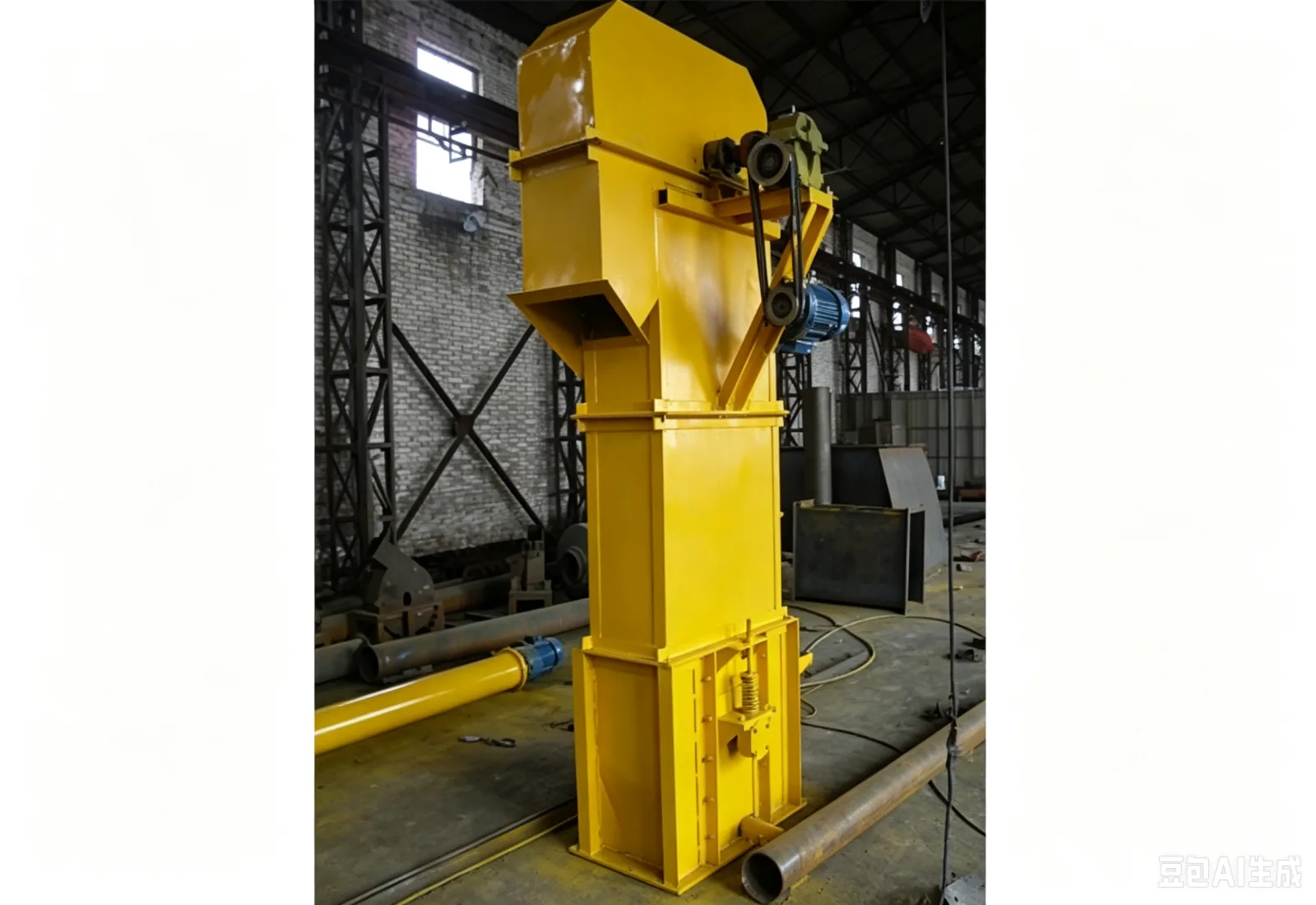
The TD belt bucket elevator moves material vertically using a traction belt and buckets, and is widely used for grain, seed, feed, powders and general granular material. Whether it suits a particular material depends on the combined assessment of bucket fill, belt speed, how the material rolls, feed impact and the discharge method; lift height alone says nothing about actual throughput.
The machine normally comprises a head drive, traction belt, buckets, casing, a boot tensioning or return assembly, inlet and outlet, and the supporting structure. Selection should confirm the belt splice, misalignment protection, tensioning travel, bucket fastening method, return-side cleaning and boot cleanout. For fragile grain or oilseeds, allowable breakage and residue figures should also be established from a material trial.
The lower feed section guides material into the moving buckets; the buckets travel up the casing and, in the head section, throw the material into the outlet along a set trajectory. Feeding too aggressively can cause boot accumulation or uneven bucket loading; feeding too little makes output fluctuate. The discharge path is also affected by particle size, moisture content, bucket speed and outlet geometry, so real projects should use representative material to check for carryback, adhesion or spillage.
| Component | Function | To be confirmed |
|---|---|---|
| Buckets | Pick up, lift and discharge material | Volume, spacing, material, mounting method and allowable lump size |
| Belt | Carries the buckets and transmits drive force | Width, ply count, splice, tensioning and misalignment control |
| Head section and drive | Drives the belt and completes top discharge | Motor and gearbox, service position, braking and guarding |
| Casing and boot | Contain the material flow and connect upper and lower structures | Height, sealing, inspection doors, cleaning and support |
| Detection devices | Monitor abnormal conditions and feed the interlocks | Misalignment, speed, blockage, level and emergency-stop signals |
Allow space for the overall machine height, head-section servicing, boot cleanout and inspection doors on both sides. Confirm the center heights and discharge directions of upstream and downstream equipment on the layout drawing, so the outlet does not face a beam, column, bin wall or narrow passage. The supporting structure and foundation must also allow for machine weight, material load, platforms and ladders, and possible vibration. Lifting, section assembly and belt installation methods should be clarified before delivery.
Start lifting only after the downstream equipment is ready; on shutdown, stop the upstream feed first and let the machine empty as far as possible. During operation, check belt misalignment, tensioning condition, bucket fastening, drive noise, boot accumulation and carryback at the outlet. If the belt swings abnormally, buckets rub or lifting capacity drops noticeably, stop feeding and investigate — repeated starting and stopping is not a substitute for fault-finding.
Loaded running should check feeding, lifting, discharge, carryback, belt misalignment, blockage and cleaning access. The quotation should list the scope for belt, buckets, drive, casing, tensioning, detection devices, guarding and platforms; civil foundations, dust extraction ducting, site cabling and integrated commissioning must be identified in the project schedule.
Recommended next step
Connect pretreatment, pressing, filtration and packaging into one practical production route.
Check hot-press, cold-press and small-shop models by batch capacity.
Open pageMatch cleaning, crushing, roasting, pressing, filtering and filling equipment.
Open pageCompare price, capacity, process, operation and startup requirements.
Open pageSend the material, target output and destination for a matched factory quote.
Request quoteReview additional machine, process and buyer resources on hydraulic-oil-press.com.
Open website