Compare machine models
Check hot-press, cold-press and small-shop models by batch capacity.
Open page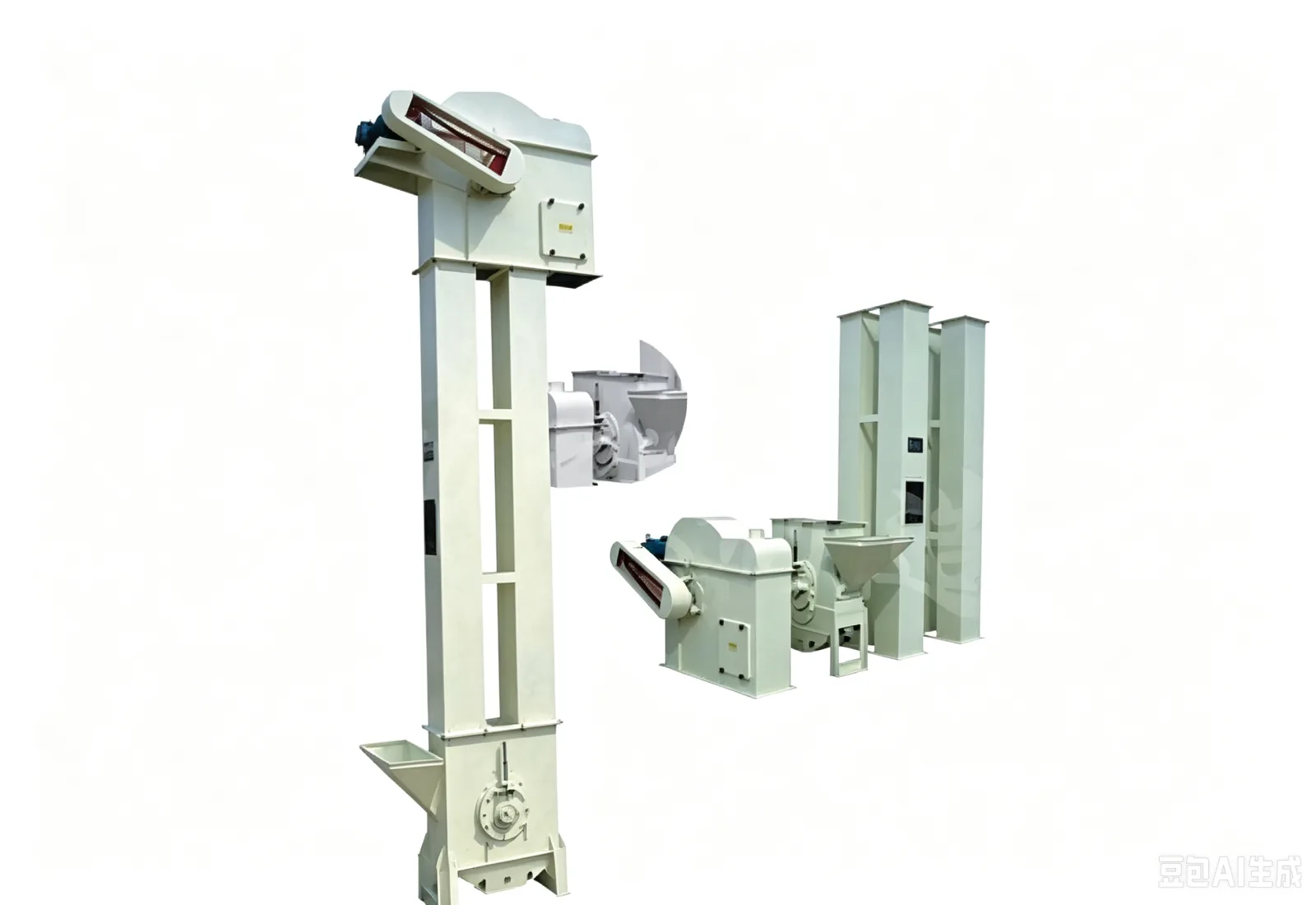
Grain elevators handle vertical transfer of wheat, corn, paddy, feed and oilseeds. For grain and seed, throughput is rarely the only concern: breakage, cross-contamination, residue, cleaning and dust control matter just as much. Crop variety, moisture content, impurity ratio and the way material arrives all change bucket fill, belt speed and the amount of feed buffering required.
Start by fixing the allowable breakage rate, target throughput and lift height, then confirm bucket type, traction speed, inlet buffering, discharge arrangement and cleanout openings. Oilseeds vary in particle size and flow behavior, so if several materials will run on the same machine, state the residue control and cleaning time required after a changeover. Where feeding is uneven or large foreign objects can enter, upstream cleaning and feed protection should also form part of the scheme.
Grain enters the boot steadily from a receiving hopper or upstream conveyor, is carried in the buckets to the head section and then discharged into a silo, cleaning machine, weighing device or the next process step. Controlling breakage is not a matter of one "low speed" setting; feed impact, bucket speed, top discharge, drop height and downstream reception all have to be handled together. Particle size, surface condition, moisture content and impurity ratio differ between grain varieties and oilseeds, so actual operation should be based on trials with the relevant material.
| Section | Function | Priority on grain projects |
|---|---|---|
| Receiving section | Accepts incoming material and guides it into the buckets | Prevent off-center loading, excessive impact and foreign objects |
| Buckets and traction element | Pick up and lift grain or seed | Bucket speed, fastening, belt misalignment and breakage performance |
| Casing | Contains the material path and controls dust escape | Sealing, inspection doors, cleaning and residue checks |
| Head section and outlet | Delivers material downstream | Carryback, drop height, dust and downstream capacity |
| Boot | Provides tensioning, feeding and cleanout | Accumulation, servicing, emptying and safe access conditions |
When grain, feed and oilseeds run on the same machine, allow for residue from the previous batch, cleaning time and the tolerance for cross-contamination. If the product is sensitive to mixing, the changeover procedure should cover cleanout openings, accessible accumulation zones, return-side residue and downstream chutes. Emptying the upstream bin alone does not guarantee that the whole transfer route has been changed over.
Before start-up, check the buckets, traction element, misalignment protection, speed detection, inspection doors and the boot for accumulated material. During operation, record changes in throughput, breakage, noise, vibration, dust and discharge continuity. If blockage, belt misalignment, unusual friction or increased carryback occurs, stop feeding and investigate. Before cleaning, servicing or working near the machine, isolate power and upstream material and follow the site dust and personnel safety procedures.
Material trials should check throughput, breakage, carryback, residue, dust, belt misalignment, blockage and cleaning access. The quotation must define the scope for the traction element, buckets, drive, casing, inlet and outlet, instrumentation and guarding; dust extraction systems, storage equipment, civil works, site cabling and integration services are confirmed in the written technical agreement.
Recommended next step
Connect pretreatment, pressing, filtration and packaging into one practical production route.
Check hot-press, cold-press and small-shop models by batch capacity.
Open pageMatch cleaning, crushing, roasting, pressing, filtering and filling equipment.
Open pageCompare price, capacity, process, operation and startup requirements.
Open pageSend the material, target output and destination for a matched factory quote.
Request quoteReview additional machine, process and buyer resources on hydraulic-oil-press.com.
Open website